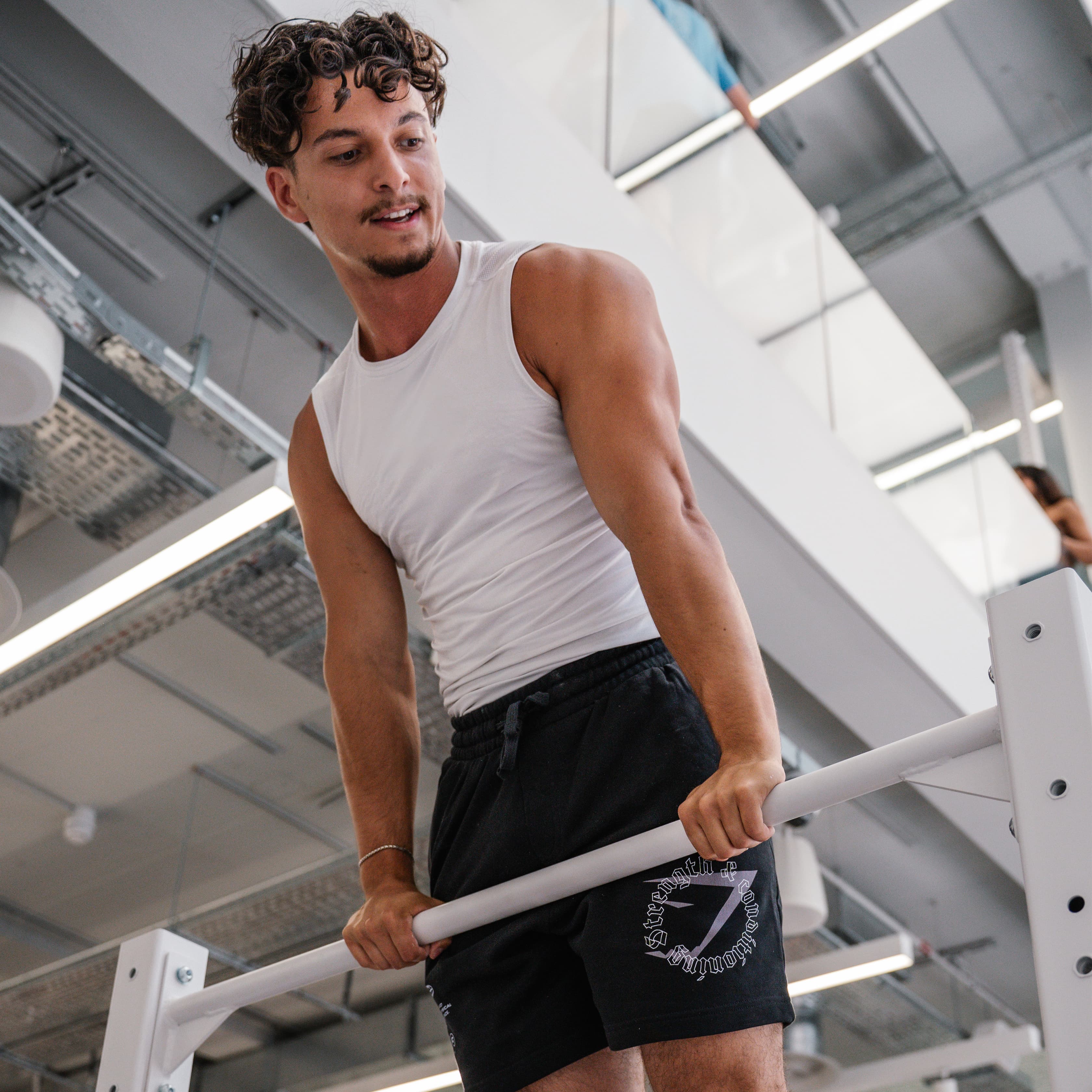





















If you’re guilty of bypassing your upper body warm up and heading straight for the bench press, you aren’t alone. But if you want to improve your form, better your mobility, and lift heavier, all while keeping injuries at bay, then an upper body warm-up is something you absolutely should not be skipping.
We’ll give you the exact steps you need to build an effective upper body warm up, and some exercises to include, so you can fire up your chest, back, shoulders, and arms ready for your session.
Do You Actually Need To Warm Up For An Upper Body Workout?
Warm ups are not optional; they’re essential. Would you skip the first 10 minutes of your favorite TV show or go straight to the first level of a game without learning how to play it first? Probably not–The same goes for workouts: If you skip the warm up, how could you expect your workout to be efficient and effective?
A proper upper body warm up isn’t just for injury prevention and helping you lift with proper form: Upper body warm up exercises have many benefits, including enhancing your performance–helping you lift heavier and run faster.
How To Warm Up For Upper Body Day
So we’ve convinced you to do an upper body warm up. But how do you structure it?
Studies have proven a simple formula for an effective warm up, which includes: ‘A period of aerobic exercise, followed by stretching and ending with a period of activity similar to the event they are to perform before beginning any activity’ [1].
While specific exercises will differ depending on your session, the formula of a good upper body workout will generally stay the same:
1. Increase HR
The first step in any warm up is to raise your heart rate. This can be done by jumping on a cardio machine, going on a light jog, or creating a circuit of movements such as squat jumps, skipping and down ups. This is probably the stage where you remove your pump cover when things start to get a little heated!
2. Non-Specific Full Body Movements
Next, you’ll take your body through some full body dynamic stretches to increase range of motion and flexibility [2]. No matter if you’re doing an upper body workout, or lower body, you should always perform a full body dynamic warm up because any compound lifts you do will engage muscles throughout your body. Examples include, World’s Greatest Stretch, walk outs or downward dog to cobra.
3. Body-Part Specific Movements
A general warm up is great–but if you’re looking to max out those lifts, you need to be getting in some movement-specific work, too. Bench press on the cards? Let’s see some shoulder and chest warm up activation. Overhead press? Shoulder mobility should be high on your list. If you have some full body movements coming up in your workout (for example, deadlifts, thrusters or rows) you should also ensure you include some lower body warm up exercises, too.
Be specific and think about the muscles and movement patterns of your workout and this will guide you in your warm up.
Big lifts pending? From lifting straps to knee sleeves, we’ve got the best lifting equipment to help you reach your next PB.
The Best Upper Body Warm Up Exercises
It might sound like a lot, but following the three steps above shouldn’t take too long. Remember this is just the prelude–not the main event–so make sure you save lots in the tank for the main workout. We’ve selected upper body dynamic warm up exercises that use only bodyweight or resistance bands to create tension in the muscles and warm them up without fatiguing them.
The best upper body warm up exercises are:
Arm circles
Shoulder Dislocates
Band pull aparts
Walk outs with press up
Shoulder external rotations
Scapular Push ups
Thread the needle
1. Arm Circles
You’ve probably done these since you were a kid in sports class. Arm circles are a good exercise to improve shoulder mobility and function as well as warm up the upper back, so if you have any overhead pressing exercises in your upper body workout, these are good upper body warmup exercises to do.
How to do arm circles:
Stand with your feet shoulder width apart, arms out to the side, and wrists at shoulder height, so your body forms a T shape.
Move your arms in small, forward circular motions (about the size of a lacrosse ball), slowly increasing the size of the circles (until they are the size of a soccer ball) for 15 to 20 reps.
Next, repeat the movement, moving the arms in backward circles for 15 to 20 reps.
2. Shoulder Dislocates
Another great shoulder warm up exercise, shoulder dislocates, use a PVC pipe or long resistance band to enhance shoulder mobility and improve joint health. Shoulder dislocates are great for training shoulder stability, making them a good push day warm up for bench press or shoulder press.
How to do shoulder dislocates:
Take hold of a PVC pipe or long resistance band in a wide grip. Stand with feet shoulder-width apart, the pipe resting in front of your thighs.
Keeping your arms straight, lift the bar up and over your head, taking it as far behind you as you can, aiming to touch your back with the pipe. Keep your core tight, ribcage down, and glutes squeezed throughout (ensuring your ribcage doesn’t flare out).
Return the pipe to the starting position, taking it back over your head and keeping your arms straight.
Repeat for 10 reps.
Note: To make this exercise more difficult, bring your grip in closer. The narrower your grip, the harder the exercise will be.
3. Band Pull Aparts
This exercise targets the rear delts and upper back while engaging the core. They train scapular retraction (the motion of pulling your shoulder blades together towards the spine), which is important for pulling exercises such as barbell rows. This will also aid proper posture, so if you spend your days mainly sitting at a desk, band pull-aparts can help prevent rounded shoulders.
How to do band pull aparts:
Take hold a long resistance band, holding it in an overhand grip, slight wider than shoulder width. With your feet placed shoulder width apart, move your arms up, so they are extended directly in front of you, wrists in line with shoulders.
Pull the band apart horizontally, keeping your arms straight so that band comes into contact with your chest. Squeeze your shoulder blades together.
Slowly return to the starting position, bringing your hands back towards each other.
Repeat for 15 reps.
Note: Choose a light band for these and perform the movement slowly, with control. Keep you chest up and shoulder back and down throughout.
4. Walk Outs With Press Up
A full body upper body warm up exercise, walks outs with an added press up are not only great for warming up the chest, triceps and shoulders, but will fire up your core, and engage your hamstrings and hip flexors. As it activates so many muscles in your body, the walk outs with press up is ideally suited as an upper body warmup for any upper body workout.
How to do walk outs with press up:
Stand upright with feet under your hips. Hinge at the hips, leaning down to place your hands on the ground as close to your feet as you can get them. Aim to keep your legs straight, but bend your knees slightly if required to reach your hands to the floor.
Taking small steps, walk your hands forward, bracing your core to prevent your hips from dipping. Stop when your hands are directly under your shoulders, and your body is in a plank position.
Keeping your core braced and glutes squeezed, perform a press up, lowering your chest down until it is just above the ground, driving your elbow back, and keeping them close to your sides.
Press back up to plank position, then walk your hands back towards your feet, letting your hips rise and you do so, and keeping your legs straight or with a slight bend if required.
When your hands reach your feet, slowly stand upright to return to starting position.
Repeat for 5 reps.
5. Shoulder external rotations
We spend a lot of time with our shoulders in an internally rotated position (Especially if you’re guilty of sitting at a desk all day!), but we don’t spend much time working external rotation. This leads to short chest muscles, overstretched back muscles, and rolled-forward shoulders–which no one wants. It’s important to warm up and train external rotation not only to help you lift more weight, but to help you lift it properly and without injury. Shoulder external rotations are the ideal shoulder warm-up to do just that
How to do shoulder external rotations:
Tie a lightweight long resistance band around the rig at chest height.
Standing side on to the band, take hold of the free end with the hand furtherest away from the rig. Bend your arm so the elbow is bent at 90-degrees, elbow close to your side.
Keeping your upper arm pinned into your torso, externally rotate your arm as far out as possible.
Pause for a second, then rotate it back in.
Repeat for 10 reps, then repeat on the other side.
6. Scapular Pull Ups
If you’ve got pull-ups, rows, or lat pulldowns programmed for your upper body workout, scapular pull-ups are a great upper-body warm-up exercise to activate the lats, rhomboids, and traps. Not only that, scapular pull ups build scapular mobility (the ability to retract the shoulder blades), working to improve posture and helping you keep good form during exercises.
How to do scapular pull ups:
Jump up to the pull up bar, taking a full overhand grip with hands just wider than shoulder width. Arms should be straight, with legs hanging straight below you. If you can’t jump up, use a box to help you.
Rotate your shoulders outwards to engage your lats, then shrug you shoulders down, pulling your shoulder blades towards your waist, squeezing your lats as you do so.
Hold the position for a couple of seconds, then release, letting your shoulder blades relax and your shoulders come back beside your ears.
Repeat for 10 reps.
7. Thread the needle
Thread the needle is a dynamic stretch that mobilizes the whole of the upper back and extends the shoulders. It is a great exercise to add to your upper body warm up as it works all the joints required for pushing and pulling movements, from barbell presses to tricep dips.
How to do thread the needles:
Kneel down on all fours in a tabletop position.
Lift your right arm up to the ceiling, following it with your gaze, then move it down to thread it under your body, in between your other arm and leg, resting the back of your arm on the floor.
Sink into the stretch, keeping your hips up. Hold for a few seconds, then repeat.
Repeat for 5 reps on one side, then switch to perform the movement with the opposite arm.
What Muscle Should You Warm Up For Upper Body Workouts?
Although your upper body warm up may vary depending on the muscles you’re focusing on in your session, you should always take particular care to warm up your shoulders. As one of the most mobile joints in the human body, it’s also very susceptible to injury [3]. Your shoulder joint is responsible for moving the arms and helping with all pushing and pressing exercises, so whatever is on the cards for your upper body warm-up, you’ll want to pay the shoulders particular attention.
You’ll also want to warm up the chest, back, and arm muscles, as well as engage the core and lower body, as they are also likely to be used in your main workout.
What Are The Benefits Of An Upper Body Warm Up?
Improved Performance
A 2010 review found that warming up improve performance by as much at 79%, while another study in 2020 found improved flexibility, power, agility and ball speed in elite table tennis players following a warm up of dynamic stretching combined with either foam rolling or static stretching [4].
Better Mobility
This helps to increase the range of motion, which is important for performing exercises correctly.
Reduced Injury Risk
One study found the number of muscular injuries, which make up 30% of injuries in sports medicine clinics, reduced following the performance of a warm up prior to exercise [5].
Increased Blood Circulation
As soon as your heart rate raises, the blood circulation to the muscles increases, making the body’s work capacity and ability to recover between sets more efficient.
Improves Mental Readiness
Warm ups help you switch of from work, or wake up when you roll out of best, helping you to focus and put your all into into your session.
So next time you think about skipping your upper body warm up, think twice, because we think those are all very good reasons to spend 10 minutes extra warming up at the start of your session.
Can I Just Start My Lifts With An Empty Bar?
Warming up with an empty barbell before loading the weight on for your compound lifts is a great idea, but ideally, you still want to complete an upper body warm up prior to jumping on the bar. This ensures your body is sufficiently mobilized and primed before adding any weight.
Once you have completed an upper body warm up, you can move onto some warm up sets of your first compound exercise, completing a set with an empty barbell and gradually increasing the weight to work up to your working weight. You will need to perform warm-up sets for every compound exercise and increase the weight gradually, but this is most crucial during your first exercise when your body is still warming up.
The Only Upper Body Warm Up You Need
Next time you find yourself tempted to bypass your upper body warm up, think again. If you’re looking to improve your performance, lift with better form, and reduce your risk of injury, taking 10 to 15 minutes at the start of your session can make a massive difference. Start with some light cardio to raise your heart rate before moving onto some dynamic stretches, which include non-specific movements and specific ones to the session ahead. Using this method, you’ll efficiently prepare your body and mind for an epic session of lifting ahead–so if you’re ready, let’s get warmed up.
References:
Fradkin, A.J., Zazryn, T.R. and Smoliga, J.M. (2010). Effects of Warming-up on Physical Performance: A Systematic Review With Meta-analysis. Journal of Strength and Conditioning Research, 24(1), pp.140–148. doi:https://doi.org/10.1519/jsc.0b013e3181c643a0.
Iwata, M., Yamamoto, A., Matsuo, S., Hatano, G., Miyazaki, M., Fukaya, T., Fujiwara, M., Asai, Y. and Suzuki, S. (2019). Dynamic Stretching Has Sustained Effects on Range of Motion and Passive Stiffness of the Hamstring Muscles. Journal of sports science & medicine, [online] 18(1), pp.13–20. Available at: https://www.ncbi.nlm.nih.gov/pmc/articles/PMC6370952/.
Miniato, M.A., Varacallo, M. and Anand, P. (2019). Anatomy, Shoulder and Upper Limb, Shoulder. [online] Nih.gov. Available at: https://www.ncbi.nlm.nih.gov/books/NBK536933/.
Hsu, F.-Y., Tsai, K.-L., Lee, C.-L., Chang, W.-D. and Chang, N.-J. (2020). Effects of Dynamic Stretching Combined With Static Stretching, Foam Rolling, or Vibration Rolling as a Warm-Up Exercise on Athletic Performance in Elite Table Tennis Players. Journal of Sport Rehabilitation, 30(2), pp.1–8. doi:https://doi.org/10.1123/jsr.2019-0442.
Woods, K., Bishop, P. and Jones, E. (2007). Warm-Up and Stretching in the Prevention of Muscular Injury. Sports Medicine, 37(12), pp.1089–1099. doi:https://doi.org/10.2165/00007256-200737120-00006.