















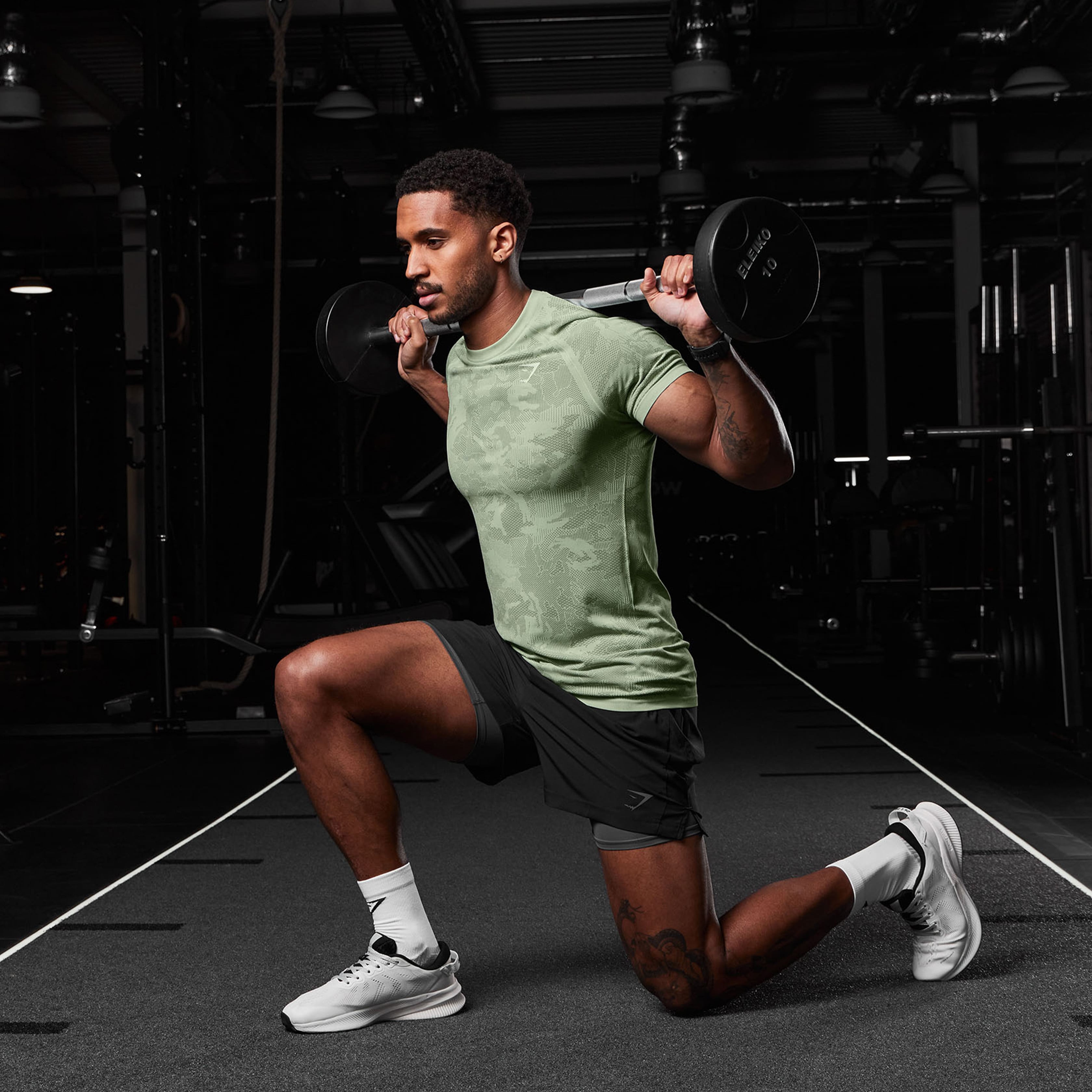
When it comes to training legs, you’re probably familiar with classic bilateral exercises like squats and deadlifts — but how often do you add single‑leg (aka unilateral) exercises to your routine?
It’s easy to overlook unilateral exercises, but they do more than just build strength and correct muscle imbalances. They also play a crucial role in improving balance and stabilisation across various movements, helping boost athletic performance and reduce the risk of injury.
If that wasn’t enough, single‑leg strength is essential in many sports — from running, where you rely on single‑leg power to propel yourself forward, to soccer, where stronger unilateral leg strength means more powerful kicks.
Loading up that back squat isn’t the only path to greater strength, size, and athleticism. Whether it’s the single‑leg RDL or the dreaded Bulgarian split squat, these single‑leg exercises deserve a spot in your programme. Ready to master them with perfect form? Stick with us as we break down the six best single‑leg exercises to add to your training.
What Are Unilateral Leg Exercises?
Unilateral basically means one-sided.
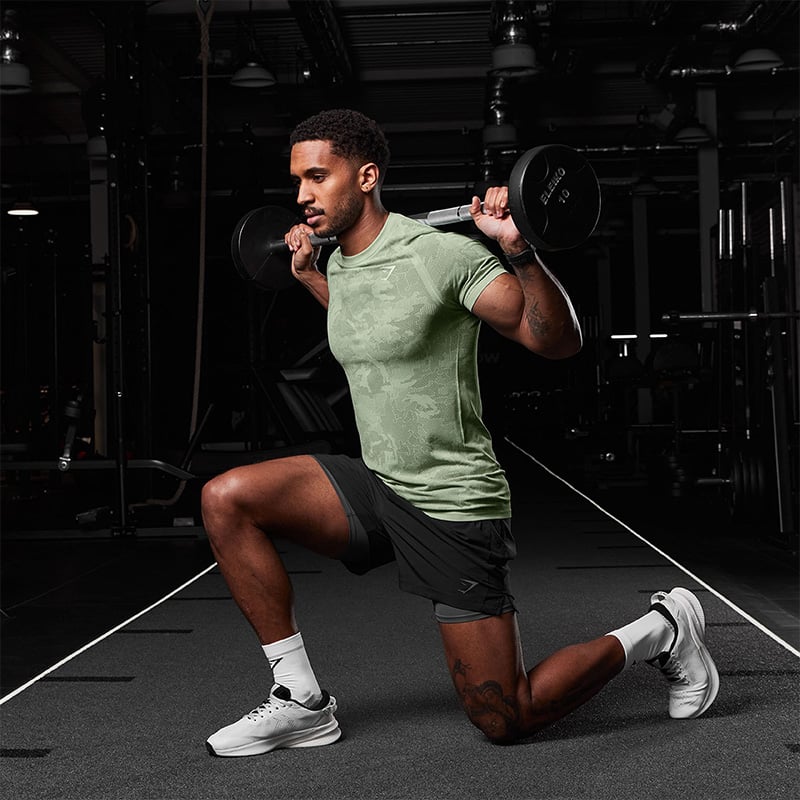
So, when we talk about unilateral leg exercises, we mean an exercise performed with the majority of the load, or main focus, on one leg at a time—for example, a lunge or step-up. These single-leg movements are excellent for improving overall functional strength and injury prevention.
What Are The Benefits Of Unilateral Exercises?
The benefits of unilateral leg exercises are well documented, and can aid your physical performance in many ways, including;
Improved Balance: Training one leg at a time challenges your body's ability to stabilise itself. This develops better body awareness and balance, which is crucial not only in sports but also in everyday activities like walking on uneven surfaces or climbing stairs.
Greater Muscle Stabilization: Unilateral exercises force your smaller stabilising muscles around the hips, knees, and ankles to work harder to keep your body steady. This improved stabilisation helps protect your joints from injury and enhances overall movement efficiency.
Increase Core Involvement: Single-leg exercises require your torso to resist rotation and lateral shifts. This forces your core muscles to engage more intensely, leading to a stronger, more stable midsection that supports all types of physical activity.
Transfer of Power, Speed & Change Of Direction: Many athletic movements—like sprinting, cutting, and jumping—are performed one leg at a time. Single leg strengthening exercises directly improve your ability to accelerate, decelerate, and change direction quickly and explosively [1].
Effect Muscle Activation: Single-leg movements help identify and correct strength imbalances between limbs, ensuring both sides develop evenly. They also allow for greater focus and activation of target muscles, enhancing hypertrophy and functional strength.
Reduced Spinal Load (in some cases): Since many unilateral exercises—like single-leg presses or step-ups—can be performed without heavy axial loading on the spine, they provide a valuable alternative for those with back issues or those looking to reduce spinal stress while still training lower-body strength [2].
The 6 Best Unilateral Leg Exercises
Naturally, there are many unilateral lower body exercises, and all have benefits and use cases—we’re going to focus on those that can help you develop strength, balance, and muscle growth.
The 6 best unilateral leg exercises we’re going to discuss are:
Single leg RDL
Pistol Squat
Bulgarian Split Squats
Lateral Squat
Single-Leg Glute Bridge
Single Leg Press
1. Single leg RDL
Main Target Muscle: Hamstrings
A much more challenging variation of the bilateral Romanian Deadlift, the Single-Leg Romanian Deadlift is a must in any single leg workout and a great exercise for hamstring and glute development [3]. One study found that the Single-Leg RDL activated the biceps femoris (one of the 3 hamstring muscles) to a greater degree than comparable hamstring exercises [4]. Its unilateral nature means it helps develop balance and core stability, too.
At first, the Single-Leg Romanian Deadlift can feel a little awkward or tricky, but be sure to persist and nail the movement without weight before adding a dumbbell or kettlebell in your opposite hand to the working leg.
How To Do A Dumbbell Single Leg RDL:
Stand tall with feet hip‑width apart, holding a dumbbell in each hand in front of your thighs, palms facing you.
Keep a soft bend in your knees, engage your core, and push your hips back while keeping your back flat and chest proud.
Slide the dumbbells down along your thighs and shins until you feel a stretch in your hamstrings (usually just below the knees or mid‑shin).
Push your hips forward and stand tall, keeping the dumbbells close to your body throughout the movement.
Perform the desired reps, moving slowly and under control, without rounding your back or locking out your knees.
2. Pistol Squat
Muscle: Quadriceps
The Pistol Squat is a unilateral squats variation that is undoubtedly one of the toughest single leg movements.
This single leg quad exercise is not just a test of strength, but also mobility and balance.
One study found that a one-legged squat elicited a higher peak of quadricep muscle activity than the leg press machine – ever tried 10 reps on each leg for Pistol Squats? Probably not, but maybe now is the time to start working towards that goal [5].
How To Do A Pistol Squat:
Stand tall with your feet hip‑width apart. Shift your weight onto one leg and extend the other straight in front of you.
Engage your core, lift your chest, and extend your arms forward to help balance.
Push your hips back and bend your standing knee, lowering your body slowly while keeping your extended leg off the floor.
Aim to bring your hips below knee level (if mobility allows) without letting your heel lift or your knee cave inward.
Drive through your heel, straighten your standing leg, and return to the starting position, keeping control and balance throughout.
3. Bulgarian Split Squat
Main Target Muscle: Quadriceps
One of the best unilateral quad exercises that is guaranteed to make your legs burn. The Bulgarian Split Squat predominantly loads the quads, glutes, and hamstrings—not the lower back. This makes it a great alternative to back-loaded exercises such as the back squat, which helps activate the quadriceps to a higher level.
Perfect for all abilities, the Bulgarian Split Squat can be completed with or without weights. Once you've nailed the movement with your bodyweight, progressing to weights is as simple as holding one or two dumbbells.
If you’re doing this single leg exercise at home, place your back foot on the edge of a couch or bed.
How To Do A Bulgarian Split Squat:
Stand about two feet in front of a bench or step, and place the top of your rear foot on it so your laces are down.
Keep your front foot far enough forward so that when you lower, your knee stays roughly over your ankle (not past your toes).
Engage your core, keep your chest tall, and bend your front knee to lower your hips straight down until your front thigh is roughly parallel to the floor.
Press through your front heel to straighten your leg and return to the starting position, keeping your torso upright.
Complete all reps on one leg before switching to the other side, moving slowly and controlled.
4. Lateral Lunge
Main Target Muscle(s): Quads, Glutes & Hamstrings
This exercise has the potential to be one of the least known on our list of the best unilateral exercises, but it’s certainly one to consider when planning single leg workouts.
Our general habits in the gym often neglect the frontal plane, where lateral movements take place. We often prioritise push and pull exercises with little attention given to moving side-to-side.
Side Lunges, or Lateral Lunges, work an array of muscles, often underdeveloped in general leg training programmes, such as your hip adductors. A study by Núñez et al., in 2018, found that lateral lunges produced better improvements in change of direction performance compared to bilateral training in 27 young team sport male players. This skill is valuable across many activities, from soccer to American football, tennis to track events [6].
This lateral leg exercise can be easily progressed by holding weight in the goblet squat position before moving on to heavier, backloaded weight from a barbell.
How To Do A Lateral Lunge:
Stand tall with feet hip‑width apart, toes pointing forward, and engage your core.
Take a big step out to the right, keeping your toes facing forward and feet flat on the floor.
Bend your right knee and push your hips back, lowering your body while keeping your left leg straight and your chest lifted.
Drive through your right heel to straighten your leg and return to the starting position.
Complete all reps on one side, then repeat on the other, moving in a controlled and balanced way.
Single-Leg Glute Bridge
Main Target Muscle: Glutes
It can be very easy to make all of your unilateral exercises quad-dominant, but hitting your glutes with an effective unilateral glute exercise is a surefire way to increase strength and power.
The Single-Leg Glute Bridge replicates the traditional Glute Bridge. However, with this single-leg glute exercise, you'll want to keep one leg off the ground. This places more emphasis on the glutes on that side of the body and also helps even out any muscular imbalances.
If performing these with your bodyweight is too easy, add a resistance band above your knees as you perform this exercise to increase glute activation [7]. You could also add hip abduction at the top of the rep to increase core and glute activation further [8].
How To Do A Single Leg Glute Bridge:
Lie on your back with knees bent and feet flat on the floor, hip-width apart. Extend one leg straight out in front of you.
Brace your core and squeeze your glutes to prepare for the lift.
Press through the heel of your grounded foot and lift your hips off the floor, creating a straight line from your shoulders to your extended foot.
Pause at the top and squeeze your glutes hard while keeping your hips level and stable.
Slowly lower your hips back to the floor with control, then repeat for the desired reps before switching legs.
6. Single Leg Press
Main Target Muscle(s): Glutes & Hamstrings
The single leg press (or unilateral leg press) is a single leg movement performed on a leg press machine. Instead of pressing the platform away with both feet, you work one leg at a time, pushing through your foot to extend your knee and hip. It’s a controlled, unilateral leg exercise that builds strength and power while helping to correct muscle imbalances between sides.
The primary movers in the single-leg press are the glutes and hamstrings, but this exercise also works the hamstrings and calves. A 2023 study of 26 male rugby players found the single-leg press to be as effective as bilateral training for increasing bilateral strength and superior for boosting unilateral strength (however, it did not enhance athletic performance in jumping or sprinting over the 5-week period) [9].
By adjusting foot placement, you can shift emphasis more toward the glutes or quads, depending on your goals:
High on the platform: Emphasises glutes and hamstrings
Low on the platform: Emphasises quadriceps
Wide stance (foot placed more to the outer sides of the platform): Emphasises inner thighs (adductors) and glutes
Narrow stance (foot closer to the centre): Emphasises outer quads (vastus lateralis)
Toes turned out (external rotation): Emphasises adductors and inner quads
Toes pointing straight ahead or slightly in: Emphasises Outer quad and hip stabilisers
How To Do The Single Leg Press:
Sit onto the leg press machine with your back against the pad. Place one foot in the centre of the platform, knee in line with your toes, and keep your other leg relaxed to the side or foot on the floor.
Grip the handles, engage your core, and press the pad upwards by driving through your heel. Then, release the safety handles or pins.
Bend your knee to bring the platform toward you, aiming for roughly a 90° knee bend (or slightly deeper if comfortable), keeping your heel flat.
Pause for a second, then drive through your heel and mid-foot to extend your knee and hip, stopping just before locking out to keep tension.
Finish all reps on one leg with steady breathing and control, then lock the safety handles and switch to the other leg.
Summary
Whether you’re training for sports performance, aiming to get stronger in the gym, or building bigger muscles, sin
gle leg exercises deserve a spot in your leg day routine.
By challenging each leg independently, movements like Bulgarian split squats, single-leg deadlifts, and step-ups help correct muscle imbalances, strengthen stabilisers, and translate directly to real-world movement — from sprinting and jumping to everyday activities.
You can include unilateral leg exercises at almost any point in your session. For strength or hypertrophy, it’s usually best to prioritise your big bilateral lifts first (like squats or deadlifts), then add single-leg work afterwards. If your focus is sports performance, rehab, or balance, you might even place unilateral lower body exercises earlier in your workout, sometimes before your bilateral lifts.
Start by adding 1–2 unilateral exercises to each lower-body workout or full-body session, and you’ll build stronger legs and a more balanced, resilient, and powerful body overall.
References:
Zhang, W., Chen, X., Xu, K., Xie, H., Li, D., Ding, S. and Sun, J. (2023). Effect of unilateral training and bilateral training on physical performance: A meta-analysis.
Eliassen, W., Atle Hole Saeterbakken and Roland (2018). COMPARISON OF BILATERAL AND UNILATERAL SQUAT EXERCISES ON BARBELL KINEMATICS AND MUSCLE ACTIVATION.
Liebenson, C. (2015). Learning the Single Leg Deadlift.
J. Green, D. (2018). ACE - CertifiedTM: February 2018 - ACE-SPONSORED RESEARCH: What Is the Best Exercise for the Hamstrings?
Jakobsen, T.L., Jakobsen, M.D., Andersen, L.L., Husted, H., Kehlet, H. and Bandholm, T. (2019). Quadriceps muscle activity during commonly used strength training exercises shortly after total knee arthroplasty: implications for home-based exercise selection.
Núñez, F.J., Santalla, A., Carrasquila, I., Asian, J.A., Reina, J.I. and Suarez-Arrones, L.J. (2018). The effects of unilateral and bilateral eccentric overload training on hypertrophy, muscle power and COD performance, and its determinants, in team sport players.
Gasibat, Q., Alexe, C.I., Raveica, G., Tohănean, D.I., Vasilios, K. and Alexe, D.I. (2023). Decoding Hip Muscle Activation: A Comparative Electromyographic Analysis of Turn-Out Bent Knee Pulse and Single-Leg Banded Glute Bridge Exercises in Healthy Female Subjects.
Choi, K., Bak, J., Cho, M. and Chung, Y. (2016). The effects of performing a one-legged bridge with hip abduction and use of a sling on trunk and lower extremity muscle activation in healthy adults.
Zhao, X., Turner, A., Sproule, J. and Phillips, S. (2023). The Effect of Unilateral and Bilateral Leg Press Training on Lower Body Strength and Power and Athletic Performance in Adolescent Rugby Players.