

















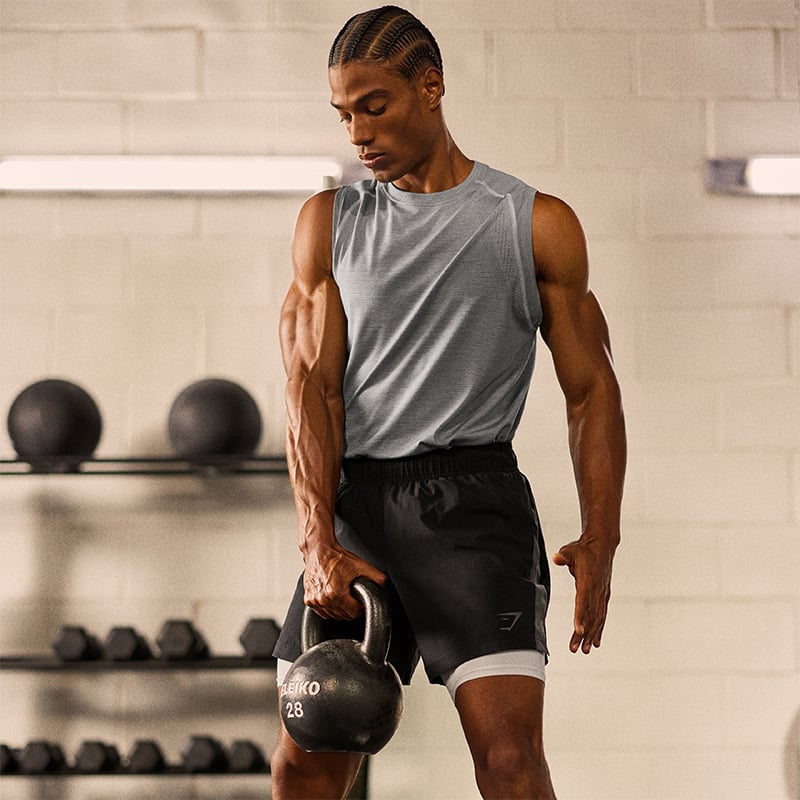
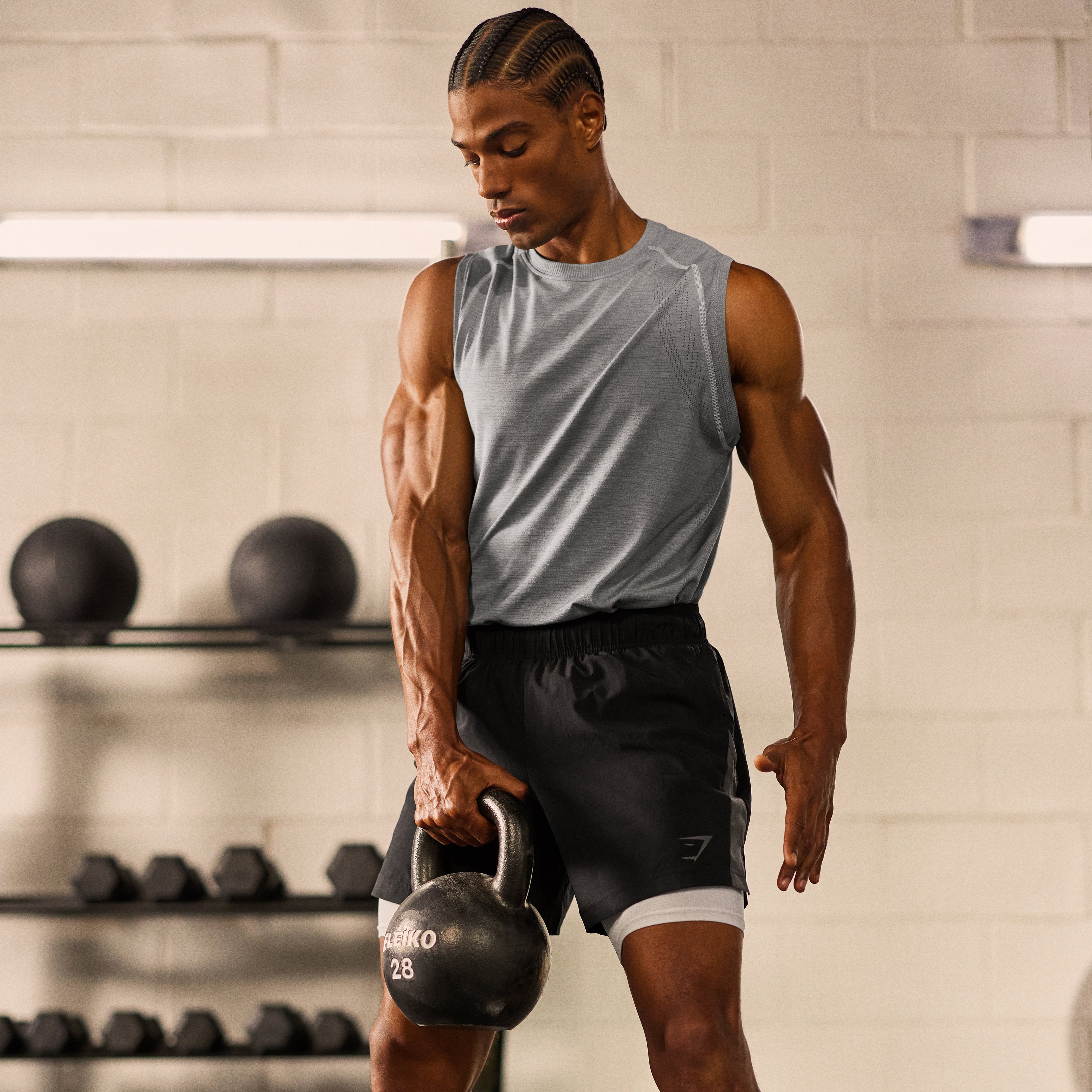
If you’re looking for a one-stop shop of a workout- something that builds strength, gets your heart rate up, improves mobility, and trains your core, all without having to spend 2 hours in the gym, it’s time to hit a full-body kettlebell workout.
Take the viral “100 kettlebell swings a day” challenge. In just a few weeks, people are noticing real gains in power, muscle definition, and cardiovascular endurance - no gym membership required.
That’s the power of kettlebell workouts: minimal equipment, maximum results.
Not only do kettlebells take up next to no space, but you don’t even need a heavy one to make serious gains. Whether you're training in your living room, hotel room, garage, or gym, this simple tool delivers big results.
So let’s dive into the best full-body kettlebell exercises, a ready-made KB workout plan that hits all muscle groups, plus how to tailor your training to your level.
Full-Body Kettlebell Workout Plan
Lets be real: you don’t need always need a rack full of weights and multiple machines to get a killer workout. This full-body workout is proof that simplicity can be seriously effective. Whether you’re short on time or just want a one-and-done sweat session, this 30-minute kettlebell workout hits every major muscle group - core, arms, legs, shoulders, all in one swoop - leaving you feeling accomplished while you develop full body functional strength.
Warm-Up (5 minutes)
Priming your body for movement is crucial no matter how short the workout! Warming up helps prevent injury, improve range of motion and get the blood flowing to the muscles you’ll be using in your workout. For this full body kettlebell workout, focus on dynamic mobility (moving your muscles and joints through their full range of motion) and activating the core and glutes:
Arm circles - 30 seconds each direction
Kneeling hip flexor to hamstring stretch - 30 seconds each side
Bodyweight squats - 20 reps
Glute bridges - 10-15 reps
Cat-cows- 30 seconds
20-Minute Full Body Kettlebell Workout
Format: 40 seconds work / 20 seconds rest. Complete 3 rounds of the following full body kettlebell exercises.
1. Kettlebell Swings
A powerhouse KB move that targets the posterior chain while ramping up your heart rate. Kettlebell swings build strength and endurance through powerful hip hinges.
How to do it:
Stand with your feet shoulder-width apart and toes slightly turned out. Place the kettlebell on the floor in front of you.
Hinge at your hips, bend your knees slightly, and grip the kettlebell handle with both hands using an overhand grip. Keep your arms straight and your shoulders pulled back.
Engage your core and swing the kettlebell back between your legs, keeping your spine and neck straight - your gaze should follow the movement between your legs at this point.
Drive your hips forward explosively, squeezing your glutes and using the momentum to swing the kettlebell up to chest height. At the top of the movement, the KB should feel weightless for a split second as if it’s floating before it begins it’s descent. Your arms should stay relaxed, acting as a guide rather than a force to lift the weight.
Let the kettlebell fall naturally as you hinge at your hips again, guiding it back between your legs while maintaining control.
Repeat for 40 seconds, squeezing your core and focusing on a powerful hip drive and maintaining a flat back throughout.
2. Kettlebell Goblet Squat to Press
This combo kettlebell move hits your quads, glutes, core, and shoulders, perfect for full-body activation in one fluid motion.
How to do it:
Stand with feet just wider than hip-width apart and hold a kettlebell by the handles at chest height. Keep your elbows close to your ribs.
Brace your core and begin to lower into a squat by pushing your hips back and bending your knees.
Keep your chest lifted and heels flat on the ground. Go as low as your mobility allows.
Drive through your heels to stand tall.
As you reach the top, press the kettlebell overhead with control, fully extending your arms.
Lower the kettlebell back to your chest and immediately begin your next rep.
3. Kettlebell Renegade Row
The kettlebell renegade row is a dynamic upper-body and core move that challenges your stability and strength simultaneously.
How to do it:
Place two kettlebells shoulder-width apart on the floor. Grip the handles and get into a high plank position with your shoulders stacked over your wrists.
Feet should be slightly wider than hip-width to create a stable base.
Brace your core and keep your body in a straight line from head to heels.
Shift your weight slightly to one side and row one kettlebell to your ribcage, keeping your elbow close to your body.
Lower the kettlebell with control, then repeat on the opposite side.
Avoid rotating your hips. Try to keep them square to the floor for maximum core engagement.
4. Kettlebell Deadlift
The kettlebell deadlift is an essential movement for developing lower-body strength and refining your hinge mechanics which improves flexibility and mobility (especially in the hamstrings), leads to better posture, reduced back pain, and enhanced lower body strength.
How to do it:
Stand with your feet hip-width apart and a kettlebell placed between your feet.
Push your hips back and bend your knees slightly as you reach down to grip the kettlebell handle with both hands.
Keep your back flat and chest up - your spine should stay neutral.
Engage your lats by squeezing your shoulder blades back, round, and down. Bring your elbows towards your hips, and brace your core before lifting.
Drive through your heels and extend your hips and knees at the same time to stand tall.
Squeeze your glutes at the top, then lower the kettlebell back down with control.
5. Kettlebell Reverse Lunge + Curl
This kettlebell lunge variation targets the legs while challenging upper-body control with a bicep curl.
How to do it:
Stand tall holding a kettlebell in each hand by your sides, palms facing in.
Step your right foot back into a reverse lunge, bending both knees to about 90 degrees. Your back knee should hover just above the ground.
As you lower into the lunge, curl both kettlebells toward your shoulders, keeping your elbows tucked.
Lower the weights back to your sides as you push off the back foot and return to standing.
Alternate legs with each rep, keeping your torso upright and core engaged throughout.
Cool Down (5–10 minutes)
Finish strong with static stretches to help your muscles recover and reduce soreness.
Downward Dog - 30 seconds
Pigeon Stretch - 30 seconds each side
Hip flexor to Hamstring stretch - 30 seconds each side
Standing quad stretch - 30 seconds per leg
Puppy Pose - 30 seconds
Deep Breathing - 1 minute
Want a Longer Workout?
You can easily extend this full-body session by adding more exercises like the Turkish Get-Up and Snatch, or increasing the amount of rounds you complete. Alternatively, for an extra challenge, complete the workout in supersets or complete each exercise AMRAP (As Many Rounds As Possible) for the duration of the workout.
How To Adjust Your Full-Body Kettlebell Workout If You’re A Beginner
New to kettlebells? Start slow and keep it simple. Use a lighter weight that you can move with control, and focus on nailing your form before picking up the pace. Stick to foundational moves like kettlebell deadlifts, goblet squats, swings, and farmer’s carries, they build strength and confidence without overwhelming you. Slow down the tempo, take longer rests between exercises, and don’t stress about hitting every rep.
12 of the Best Full-Body Kettlebell Exercises
The beauty of kettlebells is that there’s plenty of full-body exercises you can add into your workout plan to keep things fresh and challenging. Whether that’s adding them into a traditional strength routine, or before steady-state cardio for a hybrid workout, here are some of the best kettlebell full-body exercises to build solid, functional strength and feel like you’re training like an athlete. Each move hits multiple muscle groups at once… talk about efficiency!
Kettlebell Full Body Exercises
Kettlebell Swings
Muscles worked: Glutes, hamstrings, core, shoulders
Tip: Drive through the hips, not the arms. Your glutes are the engine here.
Kettlebell Clean and Press
Muscles worked: Legs, glutes, shoulders, upper back, core
Tip: Keep the bell close to your body during the clean to avoid smacking your forearm.
Turkish Get-Up
Muscles worked: Shoulders, core, hips, glutes, full-body stabilisers
Tip: Move slow and controlled- think of this as a mobility-flow meets strength challenge.
Kettlebell High Pull
Muscles worked: Shoulders, traps, upper back, glutes, hamstrings
Tip: Keep your ellbows high and wide. Imagine zipping up a jacket with both hands.
Kettlebell Deadlift
Muscles worked: Glutes, hamstrings, lower back
Tip: Keep your chest lifted and push hips back like you’re closing a car door with your bum.
Kettlebell 3-Point Row
Muscles worked: Lats, rhomboids, biceps, core
Tip: Brace your core and pull the bell towards your hip, not your chest.
Kettlebell Overhead March
Muscles worked: Shoulders, core, glutes, hip flexors
Tip: Keep the bell stacked above your shoulder and avoid leaning back.
Kettlebell Snatch
Muscles worked: Glutes, shoulders, upper back, core
Tip: Think of it as a swing that ends overhead, punch through at the top.
Kettlebell Farmer’s Carry
Muscles worked: Grip, forearms, shoulders, core, legs
Tip: Stand tall and walk with purpose like you’ve just done a big grocery shop.
Kettlebell Thruster (Squat + Press)
Muscles worked: Quads, glutes, shoulders, triceps, core
Tip: Use the momentum from your squat to power up the press.
Renegade Row With Push-Up
Muscles worked: Chest, back, arms, core
Tip: Wider foot stance = more stability. Don’t rush the row.
Kettlebell Reverse Lunge + Curl
Muscles worked: Glutes, quads, hamstrings, biceps, core
Tip: Control your descent and keep the front knee stacked over your ankle.
How to Structure a Full-Body Kettlebell Workout
While there’s no one-size-fits-all approach, a great kettlebell workout should hit all your bases. Each session should be made up of essentials movement patterns and follow a structure that challenges your body in different ways and keeps things adaptive.
Start with a Warm-Up
Always begin your workout warming up with dynamic stretches and mobility work. This primes your muscles, activates key areas like your core and glutes, and prepares your body for the intensity to come.
Include Key Movement Patterns
A balanced kettlebell workout should cover the main movement patterns (the fundamental, recurring ways our bodies move) to ensure total-body strength and functional fitness.
Push: e.g. kettlebell press
Pull: e.g. renegade row
Hinge: e.g. swings, deadlifts
Squat: e.g. goblet squat
Core: e.g. overhead march
Carry:e.g. farmer’s walk
Incorporating each of these ensures no muscle group is left behind and helps reduce injury risk by training the body as a unit.
Choose Your Style of Training
Changing the format of your training, your intensity or your technique can keep things fresh and help avoid plateaus. The way you structure your sets and reps can change the vibe of your workout, so if you’re looking to switch things up, choose one of these formats:
Circuit training: Move through all exercises back-to-back with minimal rest.
Supersets: Pair two moves and alternate between them with limited rest.
AMRAPs (As Many Rounds As Possible): Complete as many rounds as possible within a set time frame.
EMOMs (Every Minute On The Minute): Do a set number of reps every minute on the minute, resting during the leftover time before the next minute starts.
Mix it up regularly and listen to your body, consistency plus variety is where progress lives.
4 Tips For An Effective Full-Body Kettlebell Session
Choose the right weight: You want to choose a bell that is heavy enough to challenge you, but light enough to maintain form. Start lighter and work your way up, don’t use too heavy a bell too soon.
Focus on form: During full body kettlebell exericises, especially swings and snatches, don’t rush the reps. Nail the technique e.g swing with hip drive, position your wrists correctly in overhead presses.
Don’t forget your core: Kettlebells can throw you off balance, and an engaged core is essential during carries and loaded exercises. Don’t forget to keep the core tight to keep your form right.
Prioritize progressive overload: Progressive overload is an essential principle in free weight training. You need to gradually increase intensity with more reps, weight, short rest, or harder variations over time to see real progression.
FAQs
What are the benefits of using kettlebells for a full-body workout?
Kettlebells aren’t just trendy, they’re tried-and-tested tools with real results. The benefits speak for themselves:
Kettlebell training builds full-body strength, endurance and lean muscle
Elevates heart rate quickly for a mixture of cardio and conditioning
Improves mobility and joint stability through dynamic, multi-planar movement
Fires up the core in nearly every exercise thanks to the offset load
Supports fat loss by recruiting multiple muscle groups at once so you burn more at rest
Increases functional fitness - you’ll move better, lift better, and feel stronger in everyday life
Plus, kettlebells are accessible (and affordable to buy for home workouts). You can train with just one piece of equipment in small spaces, be that a corner of a busy gym or your living room.
They’re also incredibly versatile. From ballistic moves like swings and cleans to controlled movements like presses and carries, kettlebells challenge your muscles in unique and effective ways.
Kettlebell training encourages mindful movement, it requires a lot of focus and technique. Because the weight distribution is different than a dumbbell or barbell, your stabilizers and coordination get a workout too - leading to better movement mechanics and injury prevention over time.
Kettlebells work with your body, not against it, so you can train hard while moving well.
Can you build muscle with full-body kettlebell workouts?
You can build muscle with any form of full body resistance training. Kettlebell training is a great way to build muscle mass, especially when you perform compound movements that target your glutes, legs, shoulders, and back. If muscle growth is your goal, focus on unilateral exercises where the load is doubled, progressively lifting heavier, and staying consistent. To add muscle mass, you have to lift heavier, so jump up to the next weight when possible.
How often should you do full-body kettlebell training?
Anywhere from 2 to 5 times a week is a good place to start with full-body KB training, depending on your fitness level and goals. Consider structuring your KB workouts like normal strength training program. Just make sure you’re giving your body enough time to rest and recover between the tougher sessions.
Is a 20-minute kettlebell workout enough?
Absolutely. Kettlebell workouts are super efficient because they work multiple muscle groups at once and get your heart rate up fast. With the right structure and compound lifts, 20 minutes is more than enough to get in a solid sweat and get stronger.
Final Thoughts
Full-body training proves that sometimes, less really is more. With just one piece of equipment, you can get a serious total-body workout in all in under 30 minutes. Whether you’re a beginner starting with foundational moves or a seasoned lifter looking to switch things up, kettlebells offer an efficient, adaptable way to work out anywhere, anytime.
The key? Consistency, good form, and a willingness to challenge yourself. Keep your workouts dynamic, listen to your body, and don’t be afraid to level up as you get stronger. Your future self will thank you.
Next time you're tight on time or short on space... grab a kettlebell, get swinging and get ready to feel stronger, fitter, and more powerful.
Looking for more kettlebell training? Download the Gymshark Training App and find a host of full-body workouts.