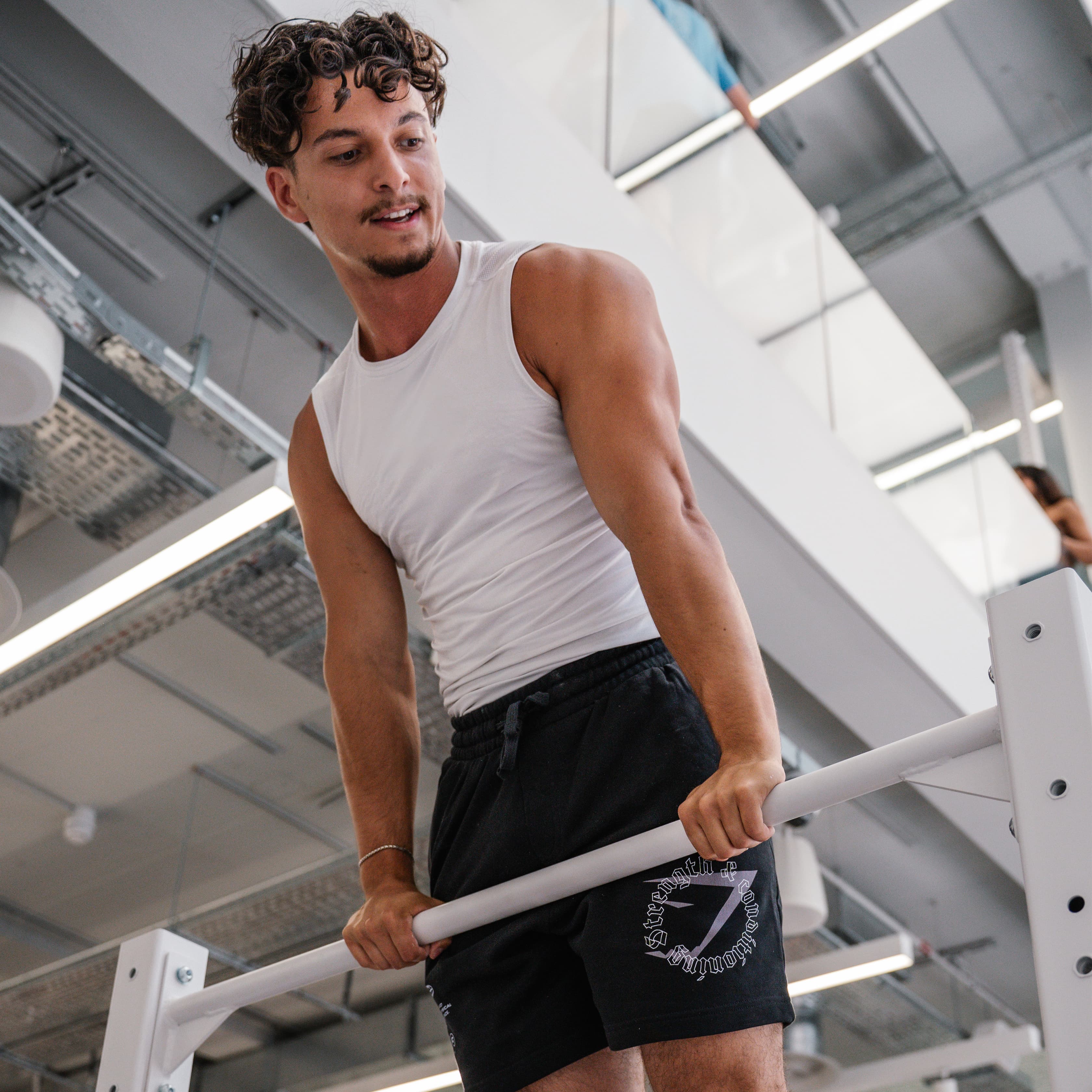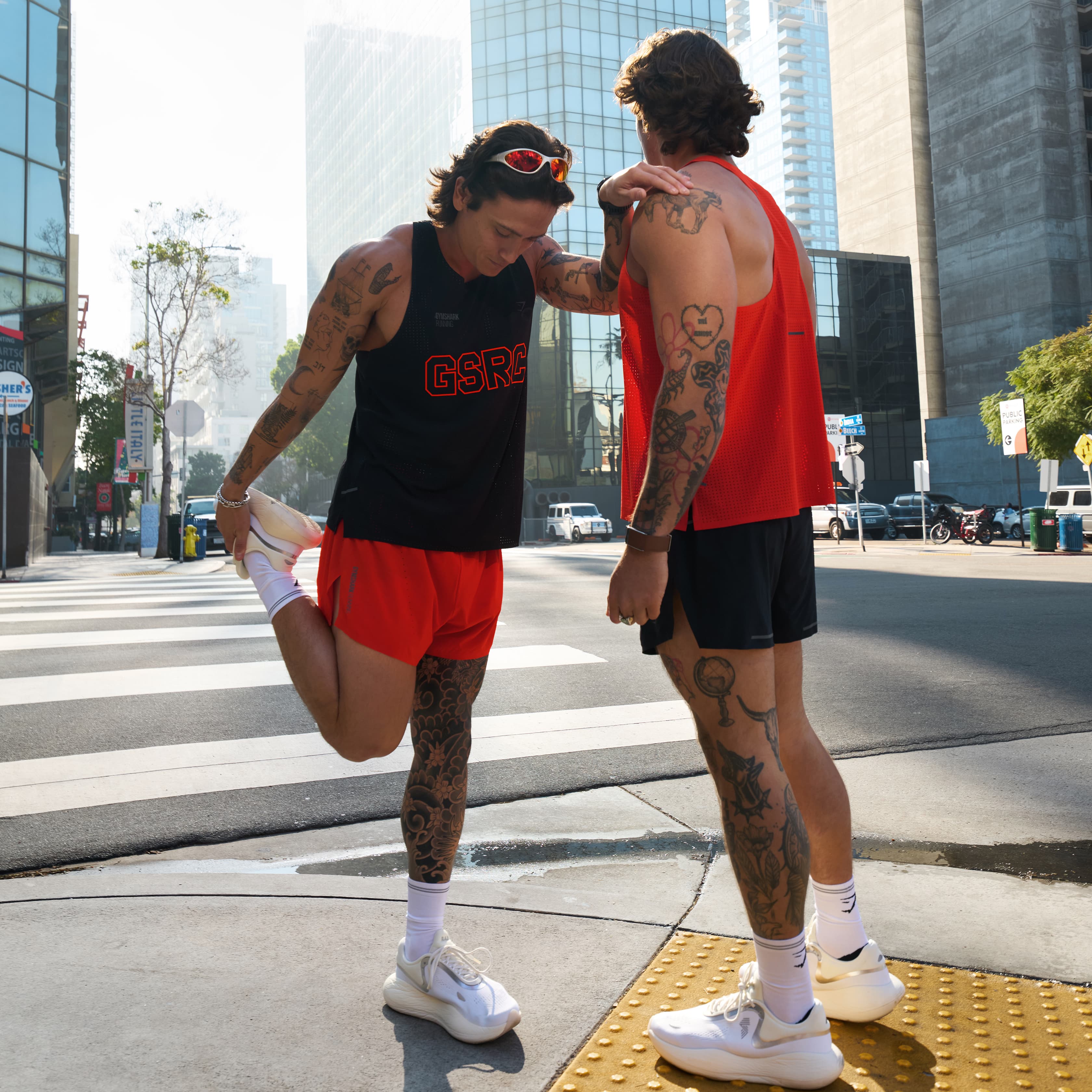




















Not long ago, the gym felt like it had two distinct tribes: the lifters and the cardio crowd—each sticking firmly to their side of the turf. But fast-forward to 2025, and fitness has evolved. Now, it’s more common to see people bouncing between barbells and treadmills, blending heavy lifts with high-intensity intervals and strength work with sweat sessions.
As this new wave of hybrid training takes over, an old debate resurfaces: Does cardio kill gains?
For so long, cardio was treated like the enemy of muscle growth–as if stepping onto a treadmill or attending a single cycling class could undo months of hard-earned progress. The fear that your gains would vanish the moment you dared to break a sweat without a barbell in hand.
But does the myth still stand? Or have hybrid athletes proven the myth wrong and finally put it to bed?
It’s time to settle the debate once and for all: Does cardio kill gains, or have we been avoiding the treadmill for no good reason?
It’s time to find out. We’ve enlisted Senior Gymshark Fitness Pros, Tyler Saunders and Josh Carr, to help us settle the debate, once and for all.
Does Cardio Kill Gains?
It’s an age-old debate that sends many of us into a spiral of confusion. The theory that cardio can, in fact, hinder your ‘gains’ has been around since the 1980s (if not earlier).
Robert C. Hickson coined the term ‘Adaptation Interference’ in his 1980 study. In this study, Hickson concluded that doing resistance training and cardio together in a single program (called ‘concurrent training’) led to fewer strength gains after 10 weeks than those doing only resistance training [1].
The study set the tone for years to come, leading many bodybuilders to steer clear of any form of cardio machine to minimize the impact on their hard-earned gains.
But is the theory true? – Not really. And here’s why:
Why Cardio Won’t Impact Your Strength Gains (And Could Actually Help Them)
‘There is some truth to the interference effect,’ explains Gymshark Senior Fitness Pro, Tyler, ‘but only if you do excessive amounts, or high-volume endurance work.*
‘If your nutrition and recovery are poor, then it can interfere with strength gains. But if it's done correctly (right intensity, timing, and duration), combining both strength and cardio can increase work capacity and improve recovery during and post-workout.’
Recent studies support this, finding that cardiovascular exercise activates key signalling pathways (such as Akt/mTOR and MAPK) that promote protein synthesis and muscle growth. While not as potent as resistance training, numerous recent studies have shown aerobic exercise can still contribute significantly to muscle hypertrophy and prevent muscle atrophy in certain populations [2,3].
Even when some studies have gone as far as to show an ‘interference effect’, the impact is likely minor at most.
This 2021 study found that cardio only impacted strength gains for trained individuals performing resistance and endurance training within the same session (less than 20 minutes apart)–but this impact was only moderate and did not occur when the modalities were performed in separate sessions [4].
In short, you might not make as fast (or as significant) ‘gains’ doing a weekly split of strength training and cardio as you would if you were doing solely resistance training–but, in most cases, cardio will not blunt your hypertrophy.
@seanfitzness How Cardio will “KILL YOUR GAINS”😵🪦 #cardio #hybrid #hyrox ♬ 剪辑版Experience王晓童 Show Remix - 王晓童TONE
How To Combine Strength Training And Cardio While Minimizing Muscle Loss
Follow these tips to minimize the interference between resistance training and cardio to maximize your gains:
Keep your cardio and resistance training separate (if possible!): ‘If you are taking on multiple training sessions per day, I would personally do any cardio first,’ states Josh. ‘If possible, leave a minimum of 4 hours before doing strength training after. This is because the AMPK molecular signalling pathway remains activated for around 4 hours post-cardio exercise, which can interfere with mTOR signalling. The pathway is activated by strength training and is crucial for muscle protein synthesis.’
Prioritize strength training, if doing strength and cardio within one session: We don’t all have time to hit the gym twice a day! If you do perform weight training and cardio in a single session, you should ideally do resistance training before cardio to maximise strength gains and hypertrophy.
Start your week with intense training, end it with higher volume: ‘This is my best advice to those combining strength and cardio in their routine to optimise performance,’ states Josh. ‘By putting all of your most intense training (sprints, heavy lifting, jumps and throws) at the beginning of your training week and your highest volume training (long cardio sessions, high rep bodybuilding) towards the end of your week, you give your body the maximum amount of time to recover before returning to a given stimulus.’ This approach ensures that the body is not subjected to excessive fatigue from both high-intensity and high-volume training simultaneously.
Focus primarily on longer, aerobic cardio sessions: These sessions should be 30 to 45 minutes long at 70–80% Heart Rate Reserve (HRR) (or zone 2) [2,3]. Zone 2 training will not only improve your endurance but has been found to be as effective for hypertrophy as traditional resistance training. This type of cardio is less fatiguing than higher intensity training (or HIIT), promoting faster recovery with less chance of negatively impacting your strength sessions.
Up the calories: ‘Nutrition is super important when it comes to maintaining and building muscle,’ notes Tyler. Adding cardio into your routine means you’ll burn more calories, so you must increase your calories accordingly: ‘Ensure you're still eating in a surplus (or maintenance at least) and hitting your relevant protein target (around 2g per kg bodyweight) to fuel muscle growth.’
Recovery is key: Rest days might feel counterintuitive, but they’re essential for allowing your muscle tissues to repair and grow. You should leave at least 48 hours between resistance exercises that target the same muscle groups, which can be the ideal time to include some active rest, such as yoga, walking, or an easy jog [7].
Doing Cardio Alongside Strength Training Can Boost Performance
Being scared of losing hard-earned gains should not be a reason to skip cardio day. Not only does cardio support overall health and longevity, but it can also enhance lifting performance [5].
According to Tyler, ‘a good level of cardio can allow you to push harder and longer in workouts - think more sets & reps, shorter rest = more total volume. Key factors in muscle hypertrophy.’
Here’s how cardio training boosts your gains:
🫀 Better Heart & Circulatory Function: A stronger, more efficient heart pumps more oxygen-rich blood with less effort. That means faster recovery between sets, better muscle recovery between sessions, a lower heart rate, and more endurance for supersets, drop sets, and higher volume training [6].
⚡ Enhanced Work & Recovery Capacity: Trainer Josh Carr notes, ‘
For most people focused on hypertrophy, spending 60-144 minutes of aerobic exercise (in zone 2: 60-70% MaxHR) has been shown to have a significant positive effect on aerobic capacity. This means better recovery rates both between sets and between sessions, ultimately allowing for increased training output across the week.’
🔥 Increased Calorie Burn for Leaner Gains: Whether you're leaning out or deep in a
cutting phase, cardio helps you stay in a calorie deficit without slashing food intake. The result? Sharper definition and the chance to show off all your hard-earned muscle (yep, we’re talking about those six-pack abs).
FAQs
How Much Cardio Can I Do Without Losing Muscle?
There isn’t a set amount, but it’s probably more than you think! The most important thing is to continue prioritizing your strength sessions, training each muscle group twice weekly, and implementing progressive overload. In addition, you need to ensure you are consuming enough calories (and adequate protein) to maintain muscle mass, considering that with extra cardio added into your routine, you’ll need additional calories to account for the extra activity.
Separating your strength training and cardio into separate sessions will also help to minimise muscle loss. However, if you do perform cardio and weightlifting in a single session, you should lift first and leave the cardio for the end of the session to maximize gains.
Does Cardio Build Muscle?
While traditional cardio exercises are not primarily designed for muscle building, certain forms like HIIT and interval-based cardio can promote muscle hypertrophy and strength. A 2021 study found that HIIT can help maintain muscle mass and may even promote muscle growth (particularly for older adults who are susceptible to muscle loss or when used post-surgery) [8].
However, when it comes to building muscle, combining cardio with resistance training is more effective than aerobic training alone [9]. Muscle growth (hypertrophy) requires mechanical tension, muscle damage, and metabolic stress, all of which are best triggered by resistance training.
What’s the Best Cardio to Include Alongside Strength Training?
The best cardio for lifters is low-intensity steady state (LISS) cardio, such as swimming, cycling, light jogging, an incline treadmill, or an elliptical.
This type of cardio:
Uses stored fat for energy, supporting long-term fat loss [10].
Strengthening the heart, lungs, and aerobic capacity makes it easier to perform more reps on your lifts and allows for better recovery between sets [11].
Strengthening the heart, lungs, and aerobic capacity makes it easier to perform more reps on your lifts and allows for better recovery between sets [11].
It has a low impact on recovery, so it should interfere minimally (if at all) with muscle gains, making it easy to include frequently in your routine.
You could also include some higher intensity cardio in your training (HIIT), but due to it’s demanding nature and higher degree of fatigue, this should be included less frequently in your routine. HIIT does come with it’s own benefits, such as promoting muscle growth and increasing muscle fiber size and and oxidative capacity, aiding muscle growth and helping you lift more powerfully [8,12,13].
The Verdict
‘We now understand the interference effect much better than we did in the 1980s,’ Josh explains*, ‘and the emergence of the hybrid athlete shows that we can manage interference, if our programming is designed correctly.’*
Doing cardio alongside strength training can actually benefit your lifting. It can help you recover faster between sets, push out more reps for each exercise, and ultimately recover quicker between workouts–helping you train more frequently and harder.
Keep progressively overloading, lifting heavy, and focus on your nutrition.
Be clever with your programming, separating your strength and cardio sessions where possible, or prioritizing your strength first, if combining the two in one session.
A little cardio won’t mess with your gains — in fact, it might just take them to the next level.
Cardio day incoming? Never be stuck for what to do, with follow-along conditioning sessions, running workouts, and circuits on Gymshark Central.
*The Interference Effect is defined as one type of training (like cardio) can negatively impact or blunt the progress of another type of training (like strength).
References:
Hickson, R.C. (1980). Interference of Strength Development by Simultaneously Training for Strength and Endurance.
Irawati, V., Sylviana, N. and Lubis, L. (2024). Role Of Exercise Intensity in Skeletal Muscle Hypertrophy.
Konopka, A.R. and Harber, M.P. (2014). Skeletal Muscle Hypertrophy After Aerobic Exercise Training.
Petré, H., Hemmingsson, E., Rosdahl, H. and Psilander, N. (2021). Development of Maximal Dynamic Strength during Concurrent Resistance and Endurance Training in Untrained, Moderately Trained, and Trained Individuals: a Systematic Review and Meta-analysis.
Lang, J.J., Prince, S.A., Merucci, K., Cadenas-Sanchez, C., Chaput, J.-P., Fraser, B.J., Manyanga, T., McGrath, R., Ortega, F.B., Singh, B. and Tomkinson, G.R. (2024). Cardiorespiratory Fitness Is a Strong and Consistent Predictor of Morbidity and Mortality Among Adults: An Overview of Meta-Analyses Representing Over 20.9 Million Observations From 199 Unique Cohort Studies.
Grigoreva, I., Volkova, E. and Belikova, I. (2022). Impact of Cardio Training on the Body.
Marshall, P.W.M., Cross, R. and Haynes, M. (2018). The Fatigue of a Full Body Resistance Exercise Session in Trained Men.
Callahan, M.J., Parr, E.B., Hawley, J.A. and Camera, D.M. (2021). Can High-Intensity Interval Training Promote Skeletal Muscle Anabolism?
Lee, J. and Stone, A.J. (2019). Combined Aerobic and Resistance Training for Cardiorespiratory Fitness, Muscle Strength, and Walking Capacity after Stroke: A Systematic Review and Meta-Analysis.
Keating, S.E., Machan, E.A., O’Connor, H.T., Gerofi, J.A., Sainsbury, A., Caterson, I.D. and Johnson, N.A. (2014). Continuous Exercise but Not High Intensity Interval Training Improves Fat Distribution in Overweight Adults.
Piercy, K.L. and Troiano, R.P. (2018). Physical Activity Guidelines for Americans from the US Department of Health and Human Services.
Morgane Pengam, Christelle Goanvec, Moisan, C., Simon, B., Gaëlle Albacète, Féray, A., Guernec, A. and Amérand, A. (2023). Moderate Intensity Continuous Versus High Intensity Interval Training: Metabolic Responses of Slow and Fast Skeletal Muscles in Rat.
O’Leary, T.J., Collett, J., Howells, K. and Morris, M.G. (2017). Endurance Capacity and Neuromuscular Fatigue Following High- vs Moderate-Intensity Endurance Training: A Randomized Trial.
Conceição, M., Cadore, E.L., González-Izal, M., Izquierdo, M., Liedtke, G.V., Wilhelm, E.N., Pinto, R.S., Reistenbach Goltz, F., Dornelles Schneider, C., Ferrari, R., Bottaro, M. and Kruel, L.F.M. (2014). Strength Training Prior to Endurance Exercise: Impact on the Neuromuscular System, Endurance Performance and Cardiorespiratory Responses.
Volpe, S.L. (2025). The Effect of Endurance Running on Training Adaptations in Women Participating in a Weight Lifting Program.