


















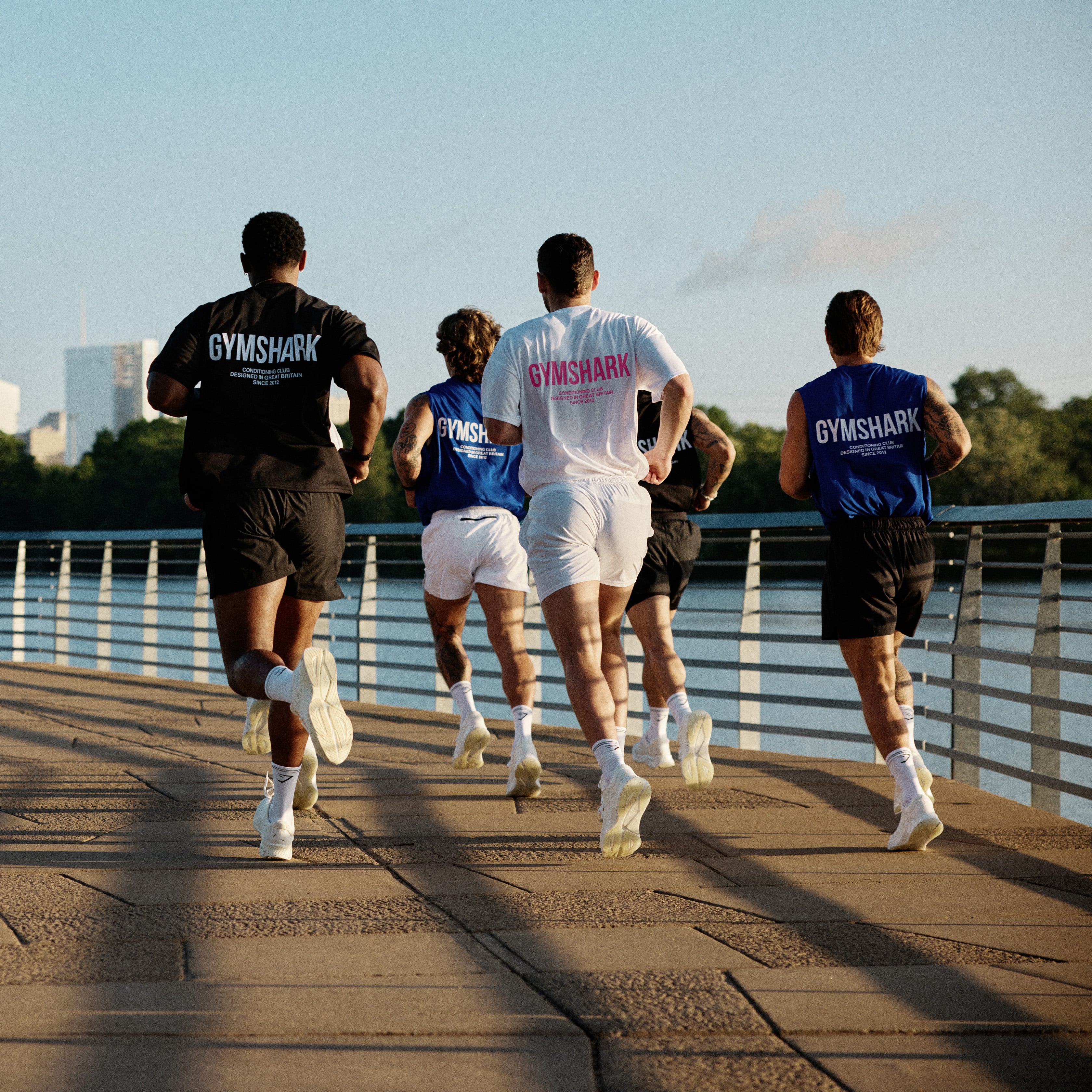
If you’ve set yourself the goal of running, whether you're a total newbie or returning after a break, you’ll probably stumble upon some 5K training plans before you lace up your trainers and go.
Known as ‘couch to 5K’ (although you don’t literally have to be a couch potato before starting), these programmes aim to gradually increase the distance you can run from 0 to 5K over the plan’s duration.
They’re popular become of their accessibility–no gym membership needed, no massive time commitment, and easy to get started. Only, it’s not that easy.
If you’ve tried any C25K plan before, you’ll know that things likely don’t run as smoothly as expected (excuse the pun). Sometimes you don’t feel motivated to head out on a run; there are days when you find the run so tough you don’t think you can carry on; or maybe you’ve experienced injuries, such as shin splints, along the way that have stalled your progress.
In short, 5K may be the shortest race distance away from the track, but completing it can be difficult.
That’s why we’ve put together our very own 5K training plan along with training tip guidance to make sure you’re fully prepared. With the help of Running Coach, Jack Bywater, and experience from runners who have completed their own Couch to 5K journeys, we’ll guide you through the process, step-by-step.
It still won't be easy, but hopefully it will help you stick to your plan and achieve a 5K distance by the end of it.
8-Week Couch To 5K Training Plan For Beginners
Ready for to get training for your first 5K? Our Couch to 5K program is 8 weeks long, and takes you through 3 runs a week, gradually building the distance week by week so that by the end of the 8 weeks, you’re able to run a 5K.
Week 1
We’re kicking off week 1 of your couch to 5k plan with short 30 second run intervals and plenty of walking in between–just enough to get your body used to impact and rhythm, without feeling overwhelmed.
“In the first week, it’s not about speed. It’s about building the habit. Short runs with generous walks teach your body the rhythm of running without overloading it,” says Jack.
This week, you’ll do the same session three times. Make sure you have at least one rest day in between.
Monday: Run 30 seconds, walk 90 seconds – repeat x8 (16 minutes total)
Wednesday: Run 30 seconds, walk 90 seconds – repeat x8 (16 minutes total)
Friday: Run 30 seconds, walk 90 seconds – repeat x8 (16 minutes total)
Week 2
In week 2, we’re adding slightly longer 1-minute running intervals, but the walks are still generous. This gradual increase helps your joints, muscles, and lungs adapt without jumping too far, too soon. That being said, it’s completely normal to feel out of breath and challenged—especially toward the end!
Remember to keep the pace slow, so you can run for the full 1.5 minutes without stopping. Like last week, you’ll do the same session three times this week, making sure you have at least one rest day in between.
Monday: Run 1 minute, walk 2 minutes – repeat x8 (24 minutes total)
Wednesday: Run 1 minute, walk 2 minutes – repeat x8 (24 minutes total)
Friday: Run 1 minute, walk 2 minutes – repeat x8 (24 minutes total)
Week 3
Week 3 steps things up gradually again, with consistent running for 90 seconds and walks long enough for recovery. You might notice your breathing feels easier by the end of the week, which is a sign your fitness is already improving. Again, you’ll repeat this week's run three times over the week.
Monday: Run 90 seconds, walk 90 seconds – repeat x7 (21 minutes total)
Wednesday: Run 90 seconds, walk 90 seconds – repeat x7 (21 minutes total)
Friday: Run 90 seconds, walk 90 seconds – repeat x7 (21 minutes total)
Week 4
“By week four, you’re doubling your run time and matching it with equal recovery,” explains Jack. “This is a perfect balance to build endurance while keeping runs enjoyable.”
Each session has six sets of two-minute runs with two-minute walks in between, helping your body adapt to longer efforts without overwhelming your legs or lungs.
Monday: Run 2 minutes, walk 2 minutes – repeat x6 (24 minutes total)
Wednesday: Run 2 minutes, walk 2 minutes – repeat x6 (24 minutes total)
Friday: Run 2 minutes, walk 2 minutes – repeat x6 (24 minutes total)
Week 5
Welcome to week 5: The runs are getting longer, and at the end of the week you have your first 8-minute run block. This week can feel daunting but don’t worry, these longer runs are balanced with walk breaks, teaching your body (and mind) to settle into a steadier rhythm.
If you find yourself struggling remember your ‘why’ for challenging yourself to run 5k. Having a good playlist or podcast really helps too!
Monday: Run 3 minutes, walk 90 seconds - repeat x4 (18 minutes total)
Wednesday: Run 5 minutes, walk 2 minutes - repeat x2 (14 minutes total)
Friday: Run 8 minutes, walk 3 minutes, run 5 min (16 minutes total)
Week 6
Week 6 marks a turning point, with runs stretching from 10 to 12 minutes, then a continuous 18-minute run by the end of the week. It feels like a big jump, but with 5 weeks of couch to 5k training under your belt, you’re more than capable of running for that amount of time. The key here is to go slow (it might feel slower than comfortable)–but stay with the pace and trust it.
Monday: Run 10 minutes, walk 3 minutes, run 5 minutes (18 minutes total)
Wednesday: Run 12 minutes, walk 2 minutes, run 8 minutes (22 minutes total)
Friday: Run 18 minutes continuous (walk if needed) (18 minutes total)
Week 7
You’re now heading into the final weeks of your 5k training. Week 7 builds upon your final run last week, with three continuous 20 minute runs, taking minimal or no walk breaks (try to be strict with these). Again, as these distances increase it’s completely normal to start to feel tired, so stick to your recovery days while keeping in those strength sessions, too.
Monday: Run 20 min continuous (walk if needed, aim to reduce breaks) (20 minutes total)
Wednesday: Run 20 min continuous (walk if needed, aim to reduce breaks) (20 minutes total)
Friday: Run 20 min continuous (walk if needed, aim to reduce breaks) (20 minutes total)
Week 8
“The final week is about confidence,” explains Jack. “You’ve built the fitness. A helpful tip I recommend is to look back at your training (whether on Strava or any other platform you’ve used to record your runs) and see just how much work you’ve put in. It really helps with peace of mind.”
By the end of this week you should hit the 5K mark 🎉 Remember, we’re not aiming for speed here, but rather covering the distance, finishing strong, and proving to yourself you can do it.
Monday: Run 25–30 min continuous (aim to cover 5K) (25-30 minutes total)
Wednesday: Run 25–30 min continuous (aim to cover 5K) (25-30 minutes total)
Friday: Run 25–30 min continuous (aim to cover 5K) (25-30 minutes total)
We’ve suggested running on Monday / Wednesday / Friday, to give plenty of time in between your runs to recover–but feel free to move these around so they work with your schedule. We do, however, suggest leaving a day between your runs to prevent overuse injuries like shin splints and to give your nervous system a break — all of which help you come back stronger for your next run.
And remember — it’s not just about the runs themselves. Check out our training tips below to help you stay motivated, boost your performance, and avoid common beginner injuries along the way.
Why Run A 5K?
If you’ve found yourself on this page, you probably already have your own reason for wanting to run a 5k.
For many people, a 5K isn’t just a distance — it’s a milestone. Short enough to feel achievable for beginners, but long enough to give you a real sense of accomplishment when you cross the finish line.
It’s as much a mental success as a physical one, releasing endorphins, increasing life expectancy, promoting weight loss, and opening up new social communities e.g., park runs. [1,2] It’s also completely free (and can be much less intimidating than stepping foot in a gym). You don’t need fancy gear, hours of spare time, or a sports background to get started. A 5K is the ideal first step into the world of running.
Hussnian Qaiser, who ran his first 5K in January 2024 and completed the London Marathon in April 2025, shares his motivation for training for a 5K:
"I was looking for an alternative to weight lifting training following an injury that preventing me from lifting. I tried my first run with the Gymshark Run Club, and realised this was a great alternative. That’s when I set myself a goal of running a 5K without stopping."
5K Training Tips To Maximize Results
So you’ve got your 5K plan–but what should you be doing around it to help you stick to it, minimize injury risk, and keep you motivated? Here are our top strategies to ensure success during your 5K plan:
Warm up & cool down
Pace yourself
Run with others
Strength train
Nutrition
Footwear
Rest & recovery
Dealing with setbacks
1. Always Warm-Up (And Cool-Down)
We know it can seem tedious, but warming up properly before your 5K training can enhance physical performance and reduce the risk of strain injuries by increasing blood flow to muscles, body temperature, and muscle/tendon suppleness [5,6].
So, what should a 5K warm-up include? Start with some dynamic stretches and plyometric movements to elevate your heart rate:
Leg Swings
Open the gate
Arm Circles
Lunges
Pogo Jumps
Calf raises
Then, transition into your 5K training, starting with a brisk walk or slow run before transitioning into your training pace.
The effectiveness of static stretching after running is contested. Various studies, including this 2021 systematic review, summarize that static stretching used post-exercise may do little to help recovery [7]. However, you should do a couple of minutes of slow jogging or brisk walking to lower your heart rate and then do a few static stretches post-run if you want to.
@_tori.fit my go to running warm up 👇🏼🏃🏻♀️ try 20-30s on each, each side: - pogo jumps - calf raises - open-close the gates - split squats - leg swings - hamstring sweeps #runningmotivation #runninggirl #rungirl #runwithme #runningwarmup #warmup #runningstretches #runner #runtok ♬ The Hills x Say It Right - 87 ℃
2. Pace Yourself (And Ignore The Time)
Pacing is one of the hardest things to learn during your 5K training plan. It’s easy to go out too fast and burn out just as quickly. Learning to pace yourself correctly will make your runs feel easier and more enjoyable.
"When you’re following a couch to 5K plan, you should be running at an effort where you can comfortably hold a conversation. If you can’t, slow down." - Jack Bywater
Your goal for C25K should be completing the distance (not racing for a certain time). This means you need to run slowly (probably slower than comfortable), so you can keep running for the duration of your intervals without stopping.
One of the best ways to pace yourself when training for your first 5K is to use the Galloway method (AKA ‘jeffing’ or the walk-run method). You can thank this method of interval running for making any distance psychologically and physically easier–which is why it’s adopted by almost every Couch to 5K plan. This training style isn’t just for beginners–it’s used by 10k-ers and marathon runners, even during races. So it’s a good method to learn from the outset, as you might use it when training for longer distances, too.
How To Do It: Start slow with walk-run intervals e.g. 1 min run/2 min walk. Gradually swap the walk for run—over weeks you’ll reach a full 5K without walking.
Focus on building endurance before worrying about speed,’ reminds Jack.
"Run slower than you think you need to – it might feel almost too easy at first, and that’s okay. "
"If you get out of breath, slow to a walk, then pick it back up when you’re ready. Over time, you’ll naturally find your easy, sustainable pace and running will feel more comfortable."
3. Run With Others To Boost Motivation
On day one of your plan, motivation is usually high, but as the weeks go on, life happens, training feels tough, and that enthusiasm can dip. That’s where running with a friend or joining a local run club can make all the difference.
“I’ve really struggled (and still do!) with motivation,” explains runner, Jess Shaw, who started C25K training in January 2024, and ran the London Marathon in April 2025. “I started with Couch to 5K, which felt manageable, especially when I ran with someone. Running alone was harder and often disheartening, especially during dark winter evenings. Confidence came with time and a lot of support from friends, family, and run clubs. It’s one of the most welcoming and uplifting communities I’ve been a part of.”
Surrounding yourself with people who share similar goals keeps you accountable and helps on days when you don’t feel like showing up.
Think you’re ‘not fit enough’ to join a run club? A UK study of over 7,000 parkrun participants found that more than 25% described themselves as ‘non-runners’ when they started. Most clubs cater to a mix of paces and experience levels, so you’re likely to find someone running at your speed [8]. Many even run beginner-focused programmes specifically designed for people training for their first 5K–so you’re not doing it alone.
4. Include Strength Training In Your 5K Training
If you’ve got a goal of running, it can be easy to get fixated on running–and only running. But including some strength sessions within your 5K training plan is essential if you want to improve running economy and performance and keep injuries to a minimum [9,10].
"Strength training helps bulletproof your body and prepares it for the impact of running," explains Jack.
"Even if you’re just starting, adding a couple of short strength sessions each week can make a big difference. It helps protect your joints, improves your running form, and even makes running easier over time."
The strength sessions don’t need to be long, and they could even be added on following your 5K training. A 2018 systematic review published in the Journal of Sports Medicine found that 2 to 3 strength sessions per week improve running economy (RE) by around 2–8%, with further research finding as little as 30 to 60 minutes per week was enough to increase running performance in female recreational runners [11,12].
Even if you don’t have access to a gym, you could do some bodyweight exercises at home, e.g.:
For legs/glutes: Bodyweight squats, reverse lunges, single-leg glute bridges, or calf raises
For upper body: Press-ups, plank shoulder taps, reverse snow angels
For core: Plank, bird dogs, dead bugs
Need some inspo? Try these strength exercises for runners.
@ryanhartsig Just bc you’re running doesn’t mean you stop lifting New @Gymshark ♬ original sound - Bamboon
5. Eat Enough To Fuel Your Body
One thing’s for sure: introducing a new activity into your schedule will spike your hunger levels.
Eating enough is not just about having enough energy to get through a run–it’s about helping your body adapt, recover, and stay healthy as you build up your mileage.
Running uses up stored energy, mainly in the form of glycogen held in your muscles. If you don’t give your body enough fuel to restore those glycogen stores–usually through eating enough carbohydrates–you may find your energy levels dropping, especially partway through a run [13].
The 2018 review summarising existing research and studies concluded that glycogen replenishment happens fasted directly after exercise (30 to 60 minutes), recommending 1.0–1.2 g carbs per kg body weight per hour and 0.3–0.4 g/kg of protein.
The review also looked into low glycogen training, finding that it could promote some benefits, such as increased fat oxidation. However, this may come at the expense of performance, reducing energy level, and making it harder to train. It’s best to fuel your body before your run, even if it’s just a banana before you head out in the morning.
Examples of what to eat before and after your 5K:
Pre-run: Try a banana with a small spoonful of peanut butter or a handful of dried fruit (like dates or apricots)
Post-run: Try chicken, tofu, or salmon with rice or pasta and mixed veg or a smoothie made with milk or a milk alternative, banana, frozen berries, and a scoop of protein powder or yoghurt
Check out some more ideas of what to eat before your workout.
6. Get The Right Trainers (And Consider What To Wear)
When it comes to running your first 5K, having the right gear isn’t about looking the part–it’s about comfort, injury prevention, and making your runs feel easier.
The most important place to start is your running shoes. Consider booking a gait analysis at a local running store. This helps match your shoes to how your feet naturally move, reducing the risk of niggles like shin splints.
Jess Shaw, who started her Couch to 5K in January 2024, faced a few setbacks along the way, including a bout of shin splints. Her top tip? Get a gait analysis.
“Finding the right trainers made a huge difference for me!” Jess says.
Most specialist running shops and some physiotherapists offer gait analysis, where you’ll run on a treadmill or track while your movement is filmed and assessed. This helps identify how your feet strike the ground, whether you overpronate or supinate, and which running shoes best support your natural stride. For many beginners, the right pair of shoes isn’t just about comfort; it can help prevent common injuries and make every run feel easier.
“One thing to steer away from as a beginner,” advises Jack, “is carbon-plated trainers. These shoes are designed for experienced runners chasing faster race times–they add stiffness and extra spring to help you push the pace. But if you’re still building your running form and base fitness, they can actually do more harm than good. The plate can put extra stress on your calves and Achilles, which increases the risk of injury if your body isn’t ready for it.”
Alongside your shoes, think about practical details that make training stress-free: leggings that actually stay put rather than rolling down mid-run, moisture-wicking t-shirts that keep you cool, and solutions for carrying your keys and phone (from built-in pockets to lightweight running belts or clip-on pouches).
That being said, clothing can usually be bought further down the line–as long as you have one running outfit, and a good pair of running shoes, that’s all you need to start training!
7. Prioritize Rest & Recovery
If you want to stay injury-free during your Couch to 5K, taking time for rest and recovery is one of the best things you can do. A study in 2014 found that athletes who take fewer than two days off each week are much more likely to suffer overuse injuries—about five times more likely—compared to athletes who rest more often. In other words, resting at least two days a week is really important to help avoid getting hurt from doing too much. [14].
Most C25k plans consist of 3 runs per week, so you can space your 5K runs throughout the week, giving you plenty of time to add some strength sessions and recovery days.
What About DOMS?
DOMS is short for delayed onset muscle soreness–that horrible stiff, achy, tight feeling you get in your muscles following exercise. DOMS are nothing to worry about, and are a very normal reaction when you start a new activity or do a particularly hard session. Luckily, DOMS are usually worst in the first couple of weeks. After that, they tend to ease up as your muscles get used to training.
What To Do: You can’t prevent DOMS completely–but there are things you can do to lessen the pain: A 2018 meta-analysis of 99 studies found that massage was most effective in reducing DOMS and perceived fatigue [15]. The analysis also found techniques like active recovery, compression garments, contrast water therapy, and cryotherapy to be successful in reducing soreness.
You might think that rest is the answer, but actually, using a foam roller or massage gun and getting out for a walk or bike for active recovery between runs can often be better!
"Always listen to your body, and if you need to take an extra rest day then do! It will probably do you favors in the long term." – Jack Bywater
@analiscruzx Muscle recovery is so crucial🤍 @gymshark ♬ Escapism. - Super Sped Up - RAYE
8. Don’t Get Disheartened By Setbacks
Almost every runner, especially when starting out, will face a few bumps in the road, whether it’s shin splints, a cold that keeps you off your feet, or just a week where life gets in the way.
The most important thing to remember is that setbacks are completely normal.
Instead of trying to ‘make up’ missed runs by cramming them all into the next week (which often leads to new injuries), ease back in gently and listen to your body. You can pick up where you left off or repeat the week in your program.
If something feels persistently painful (not just normal post-run soreness), take an extra rest day and, if needed, get it checked by a physio or GP.
Like any new habit, progress in running is rarely a perfect straight line. What matters most is consistency over time, not perfection. Remember your bigger goal, be patient with your body, and remember: even a short walk-run session is a step forward.
Get Ready to Smash Your 5K Goals
Training for your first 5K might feel daunting at first, but with a realistic plan, a bit of strength work, the right kit, and support along the way, it’s an achievable and genuinely rewarding goal. Remember: it’s not about being the fastest, it’s about showing up, sticking with it, and crossing that finish line feeling proud of what you’ve accomplished.
"Start small and don’t worry if you can’t run far at first. Stay consistent, build gradually, and surround yourself with support- like a run club. You’ll be surprised at what you can achieve." – Mikey Dyde, who went from training for his first 5K in summer 2024 to completing the London Marathon in 2025.
Ready to get started? Explore our running training plans - with advice from experts within the field to access running warm ups, runner’s strength workouts and recovery sessions to help you on your C25K journey.
FAQs
How Far Is 5k?
5 kilometers is 3.1 miles–it’s the distance that almost any long-distance runner starts from and the length that most run clubs or park runs take on each week.
It’s the most approachable distance–but that doesn’t mean it’s easy.
According to the Marathon Handbook, the average 5K time is 26 to 36 minutes [3]. A study by RunRepeat, which took into account more than 28,000 races, found that to be an above-average 5K runner, you should aim to have a finish time faster than 35 minutes [4].
But hang on, we’re getting ahead of ourselves here… If you’ve never run a 5K, the thought of running for 35 minutes straight can seem terrifying.
"Your goal as a beginner should be to run a 5K without stopping. Don’t worry about the time it takes at this stage, just aim to complete the distance."–Jack Bywater
If you have a goal of running a 5K, don’t even think about time yet. Just focus on how long you can run consistently, with the aim of eventually being able to run a 5k without stopping.
"I found the first few runs tough and physically painful,” recalls Hussnian. “On my first few 5Ks, I remember having to stop every kilometre. But I was determined to finish a full 5K without stopping, and that goal kept me motivated to keep going."
How Long Does It Take To Train For A 5k?
A couch-to-5 K training plan is generally 8 to 9 weeks long, but it can take more or less time than this, depending on your current fitness, previous sporting background, training plan, and lifestyle.
"I completed my Couch to 5K training plan in 10 weeks," says Charlie Shade, who challenged herself to complete her Couch to 5K last year, having attempted it six years previously but never finished it. This time around, she achieved it, but it wasn’t always easy: "I repeated one week twice as I found it a bit of a struggle towards the longer runs."
"The first few weeks, although daunting, were fairly easy. I found having a training program really beneficial as it made you accountable for sticking to the days, even when and if you didn't want to run."
Can I Train For A 5K In A Month?
Yes–but we wouldn’t recommend it if you’re completely new to running or returning after a break!
If you already have a good level of fitness, can comfortably walk for 30-45 minutes and jog a couple of miles consistently, then you could realistically train for a 5K in 4-weeks.
However, for many completely new to running or returning, training for a 5K in this amount of time will likely feel rushed, increase the risk of injury, and risk burnout! A slightly longer plan (like an 8 or 9-week Couch to 5K) is usually safer, more realistic, and far more enjoyable.
Remember: there’s no rush. It’s better to train gradually, stay injury-free, and enjoy the process than to push too hard and end up sidelined.
Should I Run Every Day?
No–and you shouldn’t feel like you have to. Some more advanced plans, such as marathon training ones, might incorporate ‘shake out’ runs on rest days, but if you’re a beginner, running every day is more likely to lead to fatigue, injury, or burnout than to help you get fitter faster.
Most beginner 5K plans recommend running around three times per week, with rest days or cross-training (like walking, cycling, or gentle strength work) in between. These rest days aren’t wasted time: they’re when your body recovers, adapts, and strengthens.
If you feel sore, tired or your body feels a bit ‘off’, it’s okay to take an extra rest day.
Being consistent over the weeks matters more than running every single day. Give your body time to recover between runs so you feel fresh and energised for the next one.
Is It Better To Train For My Couch To 5K On A Treadmill, Or Outdoors?
Both can work–Running outdoors can be more interesting, you get to be out in the fresh air, and it helps you get used to real-world conditions like uneven paths, wind, and hills. If the weather’s bad or it’s too dark to run outside, treadmills are a good alternative!
If you can, try to at least do some of your runs outdoors–especially longer runs towards the end of the plan—so your body and mind get used to running on the road or trail.
I’ve Missed A Week – Can I Repeat It?
Yes, there’s absolutely nothing wrong with that! It could be because you missed a week and need to redo it, or simply because you don’t feel ready to move on yet.
What you shouldn’t do is skip a week entirely and jump straight to the next one — especially if illness or injury kept you off your feet. Beginner 5K training plans (like Couch to 5K) are designed to gradually build distance and running time, giving your body a chance to adapt. Skipping ahead after a missed week can increase your mileage too quickly and raise the risk of injury.
What matters most is progress at your pace — even if that means repeating a week until it feels manageable and comfortable.
What If I Get An Injury During My Couch To 5K Training?
If you feel a niggle and suspect you might have an injury, the best thing to do is to stop and rest. Don’t try to “push through” pain, especially if it changes how you run — this often makes things worse and can turn a minor issue into a longer-lasting injury. If the injury doesn’t improve in a few days or a week, get it checked by a physiotherapist or GP.
While frustrating, injuries from running aren’t uncommon, especially when you go from doing no running to running frequently! The most frequent injuries include runner's knee, shin splints, iliotibial band syndrome, and chronic muscle injuries [16].
Treatment approaches and times vary, but usually involve:
Rest
Stretching
Strengthening exercises
Gradual return to running [17]
While you rest, you might still keep active with low-impact cross-training (like swimming, cycling, or brisk walking) if it feels comfortable and your healthcare professional has cleared it.
But be patient: Missing a few sessions to recover properly is far better than pushing on and ending up sidelined for weeks. Your plan can be adjusted, repeated, or slowed down. What matters most is staying healthy so you can keep running.
I’m Daunted By Week 5 Of The Plan, Where I Have To Run For 20 minutes! What Can I Do To Overcome This?
You’re not alone–almost everyone doing a couch to 5K training plan also dreads the 20 minute run! It feels like a big step up, but all the training you’ve done so far has prepared you to be able to run this duration continuously, so have confidence.
Try these steps to help you get through the run:
Slow your pace right down–you should be able to talk in short sentences.
Listen to something to keep you occupied–A good playlist or your favorite podcast.
Remember your why–If things start feeling tough, remember why you committed to doing a couch-to-5 K in the first place.
‘Find motivation or a reason that will help you keep going on your difficult days,’ advises 5K runner, Charlie. ‘When I struggled on some days, I often thought of my friend who has been a runner for most of his life and sadly can't run anymore - I dedicated them to him and always let him know how I was doing. Having something like this in your back pocket to keep you going really helps.’
References:
Koplan, J.P., Powell, K.E., Sikes, R.K., Shirley, R.W. and Campbell, C.C. (1982). An epidemiologic study of the benefits and risks of running. JAMA, [online] 248(23), pp.3118–21.
Sharman, M.J., Nash, M. and Cleland, V. (2018). Health and broader community benefit of parkrun—An exploratory qualitative study. Health Promotion Journal of Australia, 30(2), pp.163–171.
Kercher, M. (2021). How Long Does It Take To Run A 5k? Average 5k Times By Age And Sex. [online] marathonhandbook.com.
Nikolova, V. (2017). Compare Running Finish Times [Calculator] - 5K, 10K, Half Marathon, Marathon. [online] RunRepeat.
Fradkin, A.J., Zazryn, T.R. and Smoliga, J.M. (2010). Effects of Warming-up on Physical Performance: A Systematic Review With Meta-analysis. Journal of Strength and Conditioning Research, [online] 24(1), pp.140–148.
Manan Vora and Manit Arora (2019). An Analysis of the Evidence Base Relating to the Role of Warm-Up and Stretching in Reduction of Injury Risk in Athletes. Orthopedics and Sports Medicine: Open Access Journal, [online] 2(4), pp.1–3.
Afonso, J., Clemente, F.M., Nakamura, F.Y., Morouço, P., Sarmento, H., Inman, R.A. and Ramirez-Campillo, R. (2021). The Effectiveness of Post-exercise Stretching in Short-Term and Delayed Recovery of Strength, Range of Motion and Delayed Onset Muscle Soreness: a Systematic Review and Meta-Analysis of Randomized Controlled Trials. Frontiers in Physiology, [online] 12(1).
Stevinson, C. and Hickson, M. (2013). Exploring the public health potential of a mass community participation event. Journal of Public Health, 36(2), pp.268–274.
Blagrove, R.C. and Hooper, D.R. (2021). Strength Training for Enhancing Performance and Reducing Injury Risk. Routledge eBooks, pp.207–222.
Johnson, R.E. (2019). Strength Training in Female Distance Runners Impact on Running Economy. The Journal of Strength & Conditioning Research [online] LWW.
Blagrove, R.C., Howatson, G. and Hayes, P.R. (2017). Effects of Strength Training on the Physiological Determinants of Middle- and Long-Distance Running Performance: A Systematic Review. Sports Medicine, 48(5), pp.1117–1149.
Štohanzl, M., Baláš, J. and Draper, N. (2018). Effects of minimal dose of strength training on running performance in female recreational runners. The Journal of Sports Medicine and Physical Fitness, 58(9).
Murray, B. and Rosenbloom, C. (2018). Fundamentals of Glycogen Metabolism for Coaches and Athletes. Nutrition Reviews, 76(4), pp.243–259.
L. Ristolainen, Kettunen, J., Waller, B., Heinonen, A. and Kujala, U. (2015). Training-related risk factors in the etiology of overuse injuries in endurance sports. [online] Journal of Sports Medicine and Physical Fitness.
Dupuy, O., Douzi, W., Theurot, D., Bosquet, L. and Dugué, B. (2018). An Evidence-Based Approach for Choosing Post-exercise Recovery Techniques to Reduce Markers of Muscle Damage, Soreness, Fatigue, and Inflammation: A Systematic Review With Meta-Analysis. Frontiers in Physiology, 9(403).
Pinshaw, R., Atlas, V. and Noakes, T.D. (1984). The nature and response to therapy of 196 consecutive injuries seen at a runners’ clinic. South African medical journal [online] 65(8), pp.291–8.
Arnold, M.J. and Moody, A.L. (2018). Common Running Injuries: Evaluation and Management. American Family Physician, [online] 97(8), pp.510–516